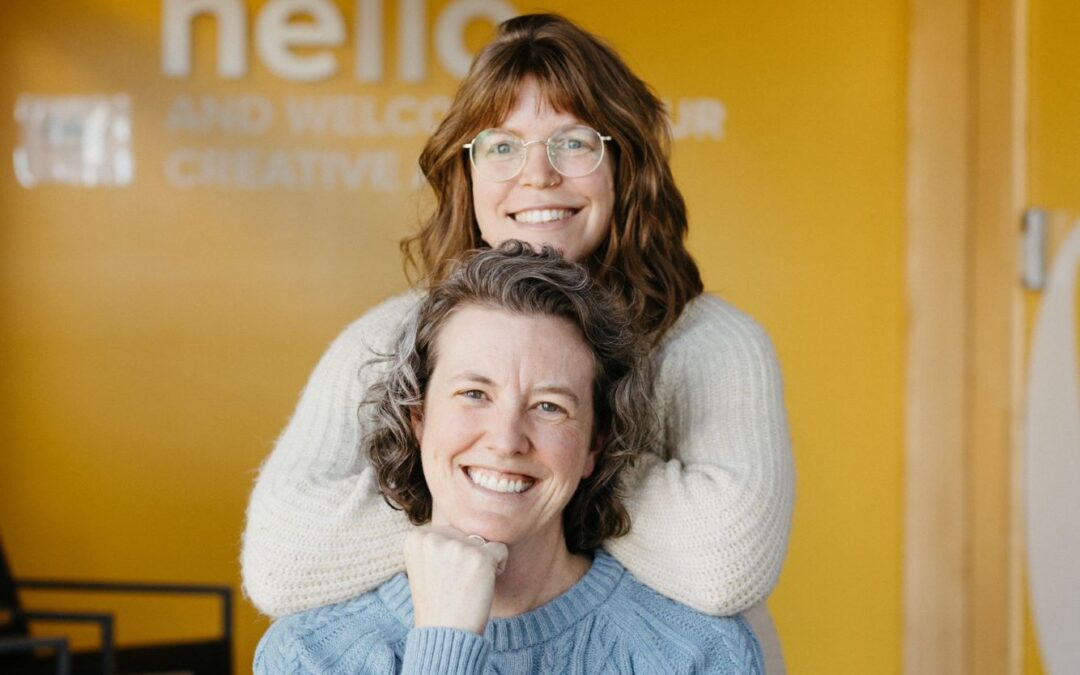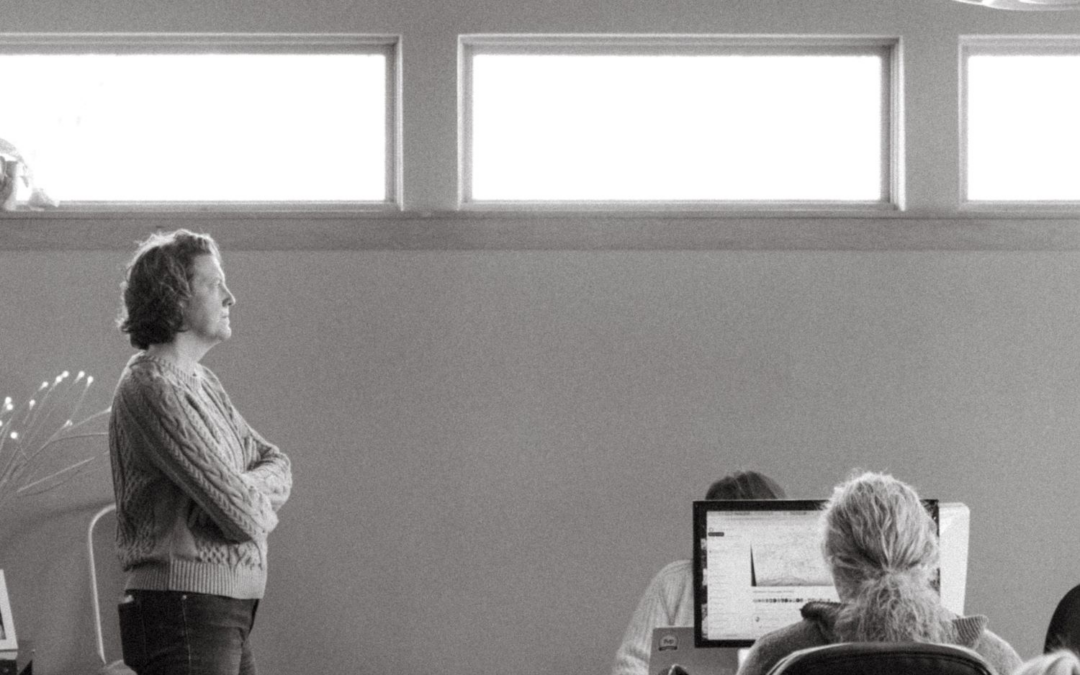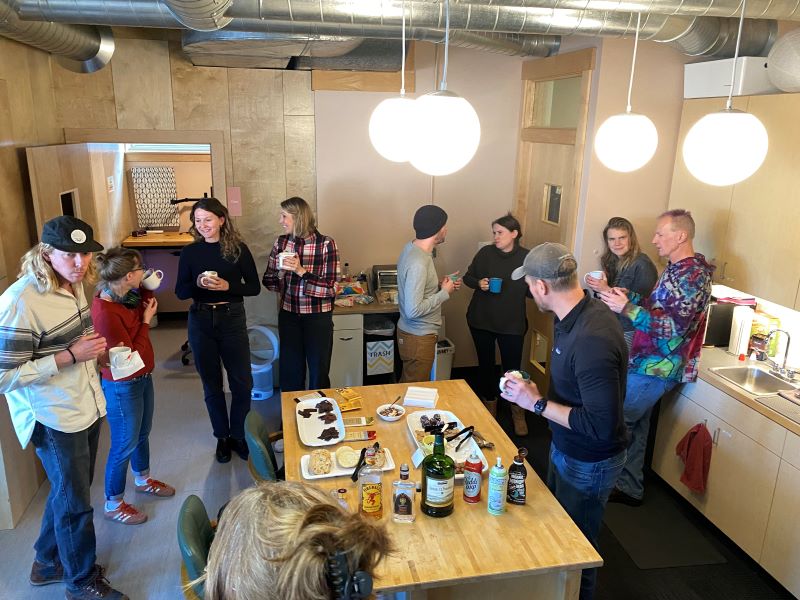

Cohere is preparing for it’s official launch at the new location, 418 Howes, in downtown Fort Collins. We soft launched last week, and since then, members new and old have stopped by to check out the hot pink desks, expanded kitchen and lunching area, and general good vibes that the new building has to offer.
The official grand re-opening of Cohere is February 1, so if you’ve been thinking about requesting a free day pass to check out the world of coworking for the first time, that would be a good day to do it!
To some the concept of a shared workspace might seem bizarre, and to others it comes naturally. It’s true that working in close proximity with other mobile professionals might take some getting used to in the beginning. It’s also important to note that what makes coworking at Cohere so special isn’t the location (or color) of the desks, but the talented freelancers and small business owners that will inhabit them on a daily basis.
In the spirit of welcoming you along on this coworking adventure, I’ve rounded up a few classic posts that examine the best ways to acclimate to and participate in our community. (It will also demonstrate in a nutshell why you should always read the weekly Cohere blog post). As always, please don’t hesitate to ask a Cohere staff member or veteran member if you’ve got questions about anything!
There are some universal attributes that apply to coworking in any setting, whether it’s a massive space in New York City or a tiny community in rural Virginia. The importance of community engagement and participation is one of these universal truths. Basically, the more you put in to your coworking experience, the more you’re going to get out of it. Period. This post includes quotes from current Cohere members about “getting what you give.”
Private offices are a new feature of the new Cohere. In the past, everyone always worked in the same room. Without conscious effort from both office-dwellers and flex desk-sitters, there’s a risk our community could become fragmented. Isolation is bad for both groups and defeats the purpose of coworking. This post contains a quick list of reminders that I hope will help us maintain the level of communication and collaboration we’ve enjoyed in the past.
With the proper preparation and foresight, collaborating with fellow coworking members can reduce stress, improve the quality of your product, and enrich your life as a community member. This post points out some things to keep in mind when looking for a collaborator.
The coworking movement is becoming huge, but it’s only one part of something even bigger–something we’ve talked about before called “collaborative consumption.” Learn more in this post.
A community where everyone keeps their failures to themselves is shallow and uninteresting. It’s way more fun to be real. Life as an independent is messy and complex, and all we’ve got is each other! Here at Cohere, we want to see the roughest draft, hear the first/worst idea, and feel the pain of the client you knew you shouldn’t take. This posts explains why you should always show’n'tell us about your hot mess.
Most people can imagine what shared office space looks like. It’s harder to understand the larger economic benefits of participating in such a space until you experience it first hand. If you’re on the fence about joining a coworking space (or just recently joined!), this post lists some big picture positive impacts to think about.
Is there an ancient Cohere blog post that really made your day? Share the link or title in the comments below!
That’s right folks, in case you haven’t heard by now, COHERE IS MOVING!
Our new home is located at 418 South Howes Street, a scant 8 blocks from our current location. Cohere 2.0 will officially open its doors to the laptop-working public on 2/1/2012, but current members and first timers will have access before that time.
Below are more pertinent details of what I hope will be a smooth transition to our new home. If you have any questions or concerns about this change, please contact Hannah or Angel. And PLEASE mark the below dates on your calendar–I don’t want anyone showing up to the cold, empty, Jefferson St. location next Monday, wondering what happened to their coworking space.
The Essential Details (for skimmers)
Cohere will be closed from 1/20-1/23 for the move and reopening at 9am on Tuesday, 1/24 at our new location. 418 South Howes Street. From Howes, walk along the south side of the building until you see the door with 2 small steps (above). Head to the top floor. Free coworking from 1/24-1/27 for first timers.
The Complete Details
In prep for the move, Cohere will be completely CLOSED for just 2 days to members and the public on:
Friday, January 20th
Monday, January 23rd
If you volunteered to help with the move (you are awesome). Please show up at Old Cohere around 10 am on Saturday, January 21st. There will be a variety of different tasks, and not all will include heavy lifting. Pizza and beer will be provided.
Cohere will reopen at our new location, 418 South Howes Street on Tuesday, January 24th. We’ll have an electronic key pad at the new location too but your code may change so please watch your email in the coming weeks for what code to use to access the space.
Mail Service: will still be available at new Cohere to ACTIVE members only and you should have changed your address effective January 13th (If you didn’t, please do so ASAP!) An active member is someone who uses at least 50% of their coworking days each month.
Conference Room Reservations: you’ll reserve the NEW conference room exactly as you do now just realize that your meetings will be at NEW Cohere starting Tuesday, January 24th. There will be no operations at Old Cohere as of Friday, January 20th.
As many of you know, Cohere is getting ready to move to our new home: a larger, more versatile space that will better meet the needs of our growing community. Of course, this new facility also comes with a bigger price tag, so I’ve had to spend time deciding the most economical way to make use of all our new space.
Among other things, this means for the first time in Cohere history, I’ve decided to offer private offices. These offices will be separate from the open work space, meaning the members that use them will spend most of their time away from the chatter and sharing that make Cohere such a lovely place to belong.
Over the past year I’ve discovered that a) doors and walls, while they may help set the tone, don’t always determine how the community functions; and b) private offices are an easy way to get much-needed money in the door. Also, private offices attract fledgling businesses that are too small for their own space, but could really benefit from and add to the dynamic of our community.
But without conscious effort from both office-dwellers and flex desk-sitters, there’s a risk our community could become fragmented. Isolation is bad for both groups and defeats the purpose of coworking. To avoid that, I put together a quick list of reminders that I hope will help us maintain the level of communication and collaboration we’ve enjoyed in the past.
How To Avoid Fragmentation In The Presence Of Private Offices
1. Keep your door open whenever possible. This small gesture will let other members know it’s ok to pop in and say hi. Quickly.
2. Make a point of chatting with other members on the way to and from your private office. Even if it’s just a smile and “good morning,” it helps.
3. Don’t eat meals at your desk. Give your eyes a rest and venture into a common area where you can enjoy some small talk.
4. Avoid IMs/IRC when the person you’re chatting with is in the building. You’re not glued to your chair. Take a much-needed stretch, and walk over to their desk.
5. Attend social functions and workshops whenever you can. This is a great way to meet members who work different schedules, and you might also learn something!
6. Interact with Cohere members via social media. We’ve got a pretty active Facebook group where people ask emergency questions, share funny links, and respond to community announcements. Being active here will ensure that we don’t forget your name, even if we don’t see your face that often.
Do you have concerns about the introduction of private offices? What are your ideas about how to maintain a high level of community interaction despite closed doors? Share your thoughts in a comment!
This is a wonderful time when the new year stretches out before us like an untouched canvas. The possibilities of what can be accomplished over the next 12 months seem endless at this moment.
As location-independent professionals, January is a great time to set goals, plan strategies, and identify the opportunities for connection and collaboration that will expand our own networks as well as enrich the larger community.
Even if you’re a regular at your local coworking space, it can be easy to become comfortable with your limited circle of friends and colleagues. But as a freelancer or business owner, it’s essential that you find new ways to challenge yourself, and new people who will expand your mind. Attending events, both inside and outside your chosen industry, is a great way to continue your education while also increasing your friends and followers.
If you’re looking for a few key events to attend this year, here’s a short list of favorites to get you started:
Worldwide #Jellyweek 2012
A “Jelly” is like coworking, only without a dedicated space, time or set of attendees. Often catalysts use the Jelly format to explore their community’s interest in coworking before opening a permanent space. International Jelly Week is a decentralized global event during which independent professionals will come together (in a person’s home, a coffee shop, a public space or an office) to work and network for the day. Topics of discussion include: What important needs can be fulfilled by coworking? How can coworking help solve local and global problems? How can coworkers use the global coworking infrastructure to foster their businesses and projects? Which people and networks aren’t yet connected to the idea of coworking, but should be involved? How can business-oriented networks and NGOs use the coworking infrastructure for their global community building and actions? Learm more at jellyweek.org and on Facebook.
2nd Annual Global Coworking Unconference – Austin, Texas – March 8, 2012
The premier event for coworkers and coworking space owners returns for its second year…bigger and better than ever! This year, the Global Coworking Unconference (GCUC or “juicy” for short) moves to a bigger location and will feature two tracks: an “unconference” track with exceptional peer-to-peer breakouts (great for seasoned coworking space owners) and a more structured conference track (perfect for newer owners and folks who just want to learn more about the movement.) Anyone can jump back and forth between the two tracks throughout the day. The larger keynotes and breaks will bring everyone back together in one large group, making it a cohesive experience for all. Learn more and register here.
International Freelancers Day 2012
International Freelancers Day is the largest FREE online conference exclusively for self-employed service professionals. You’ll learn from some of the world’s most respected professionals and thought leaders in the areas of freelancing, marketing, social media and personal development. They’ll reveal proven and actionable business-building ideas, insights, tactics and strategies that will help take your “business of one” to the next level. International Freelancer’s Day 2011 took place in September and was a huge success. Watch this website for an announcement of this year’s conference.
HOW Design Live 2012 – Boston, Mass., June 21 – 25
Registration is now open for HOW Design Live—not one but four high-energy creative conferences rolled into one. Individual tracks focus on Designers, Project Managers, Creative Freelancers, and Packaging Specialists. Choose one—or all—of the conferences detailed below and produce your most inspired and professionally rewarding creative work ever.
Check out the main web site, HOWDesignLive.com, now updated with full conference information on sessions, workshops, tours, speakers, and networking events. Sign up by March 30 and take advantage of Early-Bird Savings!
Do you know of a stellar event that independent professionals would be crazy to miss? Share it in a comment!
Well folks, 2011 is almost over. There have been ups and downs, surprises and disappointments. But over all, I think I can say with confidence that Cohere is a stronger, more vibrant community than we were before. We survived a lean summer, a difficult lease renewal, a graffiti attack, and the search for a new home. All the while, you, the amazing community, supported each other, collaborated, grew your businesses, and redefined the state of unicorn cuisine.
I’m so excited to see what’s in store for Cohere in 2012! There will be a new space to make our own, new members to welcome, new projects to devise, and new projects on which to collaborate. It will be hard work, but as freelancers and remote workers, we are no strangers to self-motivation.
But just in case you’re looking for some resolutions that will help you to improve your professional and personal life in the New Year, here are a few to get you started:
Raise Your Rates
One thing every freelancer can agree on is the need to end the feast or famine cycle. One month you’ve got too much work, the next month you’re killing time while the bank account dwindles. This is no good. One strategy for ending this cycle is to raise your rates. Undervaluing your services is a surefire way to ensure you will constantly be searching for more clients. This can be stressful and also reduces the quality of customer service you can provide to your loyal customers.
Resolve to dedicate at least a few hours of your time to researching your competition. Get a better idea of what your peers are charging, and consult industry resources (if they exist) to find a baseline rate for professionals in your field. Consult with your fellow coworkers to find our what they charge. When in doubt, double it.
Use Your Coworking Space
Once you’re a seasoned coworker, it can be easy to forget that this community exists to empower and enrich you, the mobile worker. Are you using it to it’s full potential? Your membership at Cohere gives you permission to use this community as your sounding board, your focus group, your group therapist, and your drill sergeant. The level to which you are engaged with the community determines how much of a return you’ll see on your monthly investment.
Resolve to to teach and be taught. Be willing to share: your success and failures, as well as your knowledge and time. Most importantly, just show up. Amazing things happen when you are in the company of like-minded individuals that are genuinely interested in your success.
Say No More Often
As a freelancer or small business owner it’s easy to feel guilty when you’re not working. We take on too many projects because we’re afraid that someday we might not be able to find any. This “bring it on” approach might work for bigger companies with a stable full of talent, but it’s the expressway to burn out for a one or two person business. Not charging enough for your services facilitates this need to take on more than you can really handle (see Resolution #1).
Resolve to be more choosy. Pick projects that excite you, not projects you can live with. Refuse to renew contracts with difficult clients. Embrace your status as an expert in your field, and leave the entry-level projects for entry-level professionals.
Refine Your Brand/Specialize
This is part-two of the resolution to say no more often. Finding your niche is the first step toward success in your field, and limiting the type of projects you take on is the best way to define your brand. Specializing will allow your customers and coworking community to better understand what type of work you’re looking for, facilitating referrals that you’ll actually enjoy.
Resolve to sit down with yourself and outline your dream projects and clients. Once you’ve got a list, look for overarching themes. This is the type of work you’d love to do, and therefore the work that you’ll do the best.
Don’t Work More, Work Smarter
As a non-traditional worker, you are the master of your own destiny. You decide when and where to work. But we often forget that we also have the ability to decide HOW we work. Emulating a traditional workstyle in a new place won’t allow you to achieve the greater productivity that’s proven to come along with location-independence. Most people can only be truly productive for about 4 hours a day, so why are you forcing yourself to work 8?
Resolve to listen to your body and mind. Pay attention to your work habits, and find ways to maximize your personal style. When you’re tired, take a break. When you’d rather read a book than answer emails, do it. Don’t gaze out the window at a nice day, get out in it. Seek out tools and tricks that will help you stay focused and work more efficiently.
What are your New Year’s resolutions? Share your goals for a more productive year in the comments!
The average freelancer works almost twice as long as the average nine-to-five employee. So, why is it that we feel guilty taking some time off for the holidays?
No matter how you celebrate, the holidays are a time for sleeping ridiculously late, eating way too much, spiking the egg nog, and hugging everyone you know.
To that end, the holidays are one time of the year when traditional workers have an advantage over the freelancer: They get PTO, and we get guilt. The average 9 to 5-er waits for the clock to hit quitting time, and bolts out the door. The thought of the emails waiting to be answered or presentations to be assembled won’t cross their mind again until Monday morning.
Here’s the difference: most freelancers love what they do.
We are obsessed. We think about our business every waking moment. We’re always networking, worrying about clients, checking our published work to make sure our names are spelled correctly. While we are completely in charge of when we get work done, the thinking about it never stops. We ALWAYS feel like we should be getting work done.
Maybe it’s because we still don’t feel like our job is as legitimate as one that happens in an office. Or maybe the lack of a salary safety net makes us feel uneasy about earning a few hours less this month.
Whatever the reason, I’m here to tell you that the guilt you’re feeling is unfounded, and you totally deserve a day (or seven) to completely unplug from your business.
This is not the corporate grind. You’re not competing for the corner office. You’re building a business, a legacy. You’re in there for the long hall. The work will always be here, but your friends, family, and the opportunity to make memories with them may not.
So go ahead. Activate that “out of office” email response a few days early. I know you planned to work right up until Christmas Eve, but I’m challenging you to scrap that plan. Bake 1,500 gingerbread cookies with your kids. Craft some presents for your best friends. Stay in your pajamas and read a book all day.
I’m writing you a prescription for laziness and self-indulgence. Take daily and repeat as needed. You’ll be surprised how much better you’ll feel when it’s time to be brilliant. Next year.
Wondering what to get the independent professional on your list? Stumped about the best present for the small business owner in your life?
Although there’s more to the holidays than giving and getting, here are some useful gift ideas that will help your favorite freelancer be even more productive and successful in the New Year. Feel free to add your own gift suggestions in a comment below!
1. Membership at a local coworking space.
(You know I had to…) There’s nothing better than the gifts of friendship and community, and you’ll be giving both when you buy a coworking membership for your favorite mobile worker. Most coworking spaces offer different levels and lengths of membership, so it’s much more flexible than a gym membership or fruit of the month club. Do some light research before you buy to make sure the coworking space is conveniently located and has all the amenities your small business owner will need. Cohere has a wicked discount on 3 day pass packs right now. 3 days for just $25!
2. Cloud storage for precious data.
Freelancers live on, for, and through their laptop and other mobile devices. In the blink of an eye these precious machines can be destroyed by a poorly placed coffee cup or dragged to the floor by a dangling power cord (just ask Julie). Give peace of mind by purchasing a storage unit in the cloud. Online data storage backs up your files automatically, and allows you to access them from any internet-connected computer. Check out these top five affordable online storage services.
3. A stand-up desk.
While freelance work can be done from almost any location, it’s almost always done in a sitting position. According to a study published in the Medicine & Science in Sports & Exercise journal, people who sat most of the day had a 54% increased risk to have a heart attack. Therefore, a stand-up desk can literally save a freelance writer’s life. Check out GeekDesk.com for some of the best stand up desk designs.
4. A mobile hot-spot.
While this might be at the pricier end of the holiday gift-giving spectrum, it is absolutely worth the cost. A mobile hot-spot has the power to change a freelancer’s life by creating a little bubble of secure wi-fi that will travel with them wherever they go. Slow, costly airport wi-fi, and unsecured coffee shop wi-fi will be a thing of the past, and your beloved freelancer will never have disconnect anxiety again. Read reviews of the fastest, most reliable hot spots.
5. Portable solar charger.
The only thing worse than having no internet access is dead devices with no power outlet in sight. Ease the fear of running out of juice by giving a portable charger that only needs the sun to work! There are now solar chargers that can power everything from your laptop to your smartphone as long as you’ve got an hour and access to sunlight. Check out the best portable solar charging devices here.
6. Industry-relevant e-books.
As a small business owner, it’s easy to feel like you’re just making stuff up as you go along. Reading books by successful entrepreneurs can restore inspiration as well as confidence. Instead of giving a bulky book that will only end up gathering dust, give a sleek (and more affordable) e-book that can be accessed anywhere. Here are some of our favorite titles:
Guide to Guerilla Freelancing - In this compact eBook (22 pages), Mike Smith packs in information on how to start your freelancing business for a minimum amount of money, red flags to look out for, benefits and drawbacks to freelancing, and more.
What Matters Now - This free 82-page eBook from Seth Godin is a collection of thoughts and quotes from well-known bloggers and thinkers on important topics. Each topic is about a page long. Use this book for inspiration.
Coworking: How Freelancers Escape the Coffee Shop Office - The only book written specifically for coworkers by coworkers, this is your guide to the who, what, where, why, and how of coworking. Featuring tips for finding and participating in a local coworking community, and personal stories from coworkers around the world.
Time Management for Creative People by Mark McGuinness from Wishful Thinking – Do you struggle to find enough time to get everything done? This book is here to help. Over 30 pages on how to manage your time better.
How to be a Rockstar Freelancer – Written by the creators of Freelance Switch, this ebook goes far beyond the creative aspects of the business, giving practical advice on the difficult situations a new freelancer can face: from managing your budget on a freelancer’s changing income to balancing work from multiple clients.
Seek and Destroy by Peter Shallard – This 61-page eBook discusses some of the common obstacles entrepreneurs face and explains how to overcome them. If your business is stuck and you can’t figure out why, Peter may have the answer
We have lots of anecdotal proof and some quantitative evidence that coworking helps freelancers and small business owners become more profitable.
Coworking provides an instant referral network, motivation, cost-free feedback, and an overall magical environment in which people tend to come up with money-making ideas (ok maybe it’s not “magical” but it’s definitely more special than a coffee shop).
Lots of freelancers claim that they can’t afford to try coworking, but I would argue that you can’t afford not to. So while chatting with a fairly new Cohere member the other day, I decided to see if this legend of “profitability” holds true in our own community. Here’s how the conversation panned out. (Names have been removed to protect the now slightly more wealthy).
Angel: Do you have an estimate of how many $$ of work Cohere has brought your way since joining?
Member: Give me a sec…its pretty convoluted since connections lead to connections.
Angel: isn’t that how everything works?
Member: okay, this is kind of awesome. When I account for jobs for coherians, and jobs that came about as referrals from them and referrals from those referrals, its over $5000!
Angel: holy sh*t. pardon my french. how long have you been a member?
Member: 4 or 5 months.
Angel: damns. that’s freeaking awesome!
Member: It is…kinda shocking to me to actually figure that out!
Angel: I’m beaming right now. Cohere works. Period.
Member: I was thinking to myself that ALMOST every time I am in there I make a connection that leads to work.
Angel: This is like an early xmas present to me and my fledgling little business!
Member: talk about a strong ROI..
Angel: It also helps that you’re a gifted person and super awesome to work with!
Member: looks like we need to give each other some testimonials for our respective sites!
Angel: Yes.
Member: you can tell prospective members that within about a week of joining I got a quick and simple job straight from you that effectively covered 3 months of membership. I met Nick thru an event at Cohere and that resulted in numerous jobs…and that is an arrangement that continues to be beneficial…Referrals from him got me additional clients that then referred me to other people (some in CA) who now use me as a referral for THEIR clients. It is an interconnected web of awesome. I now have had clients on both coasts…that can trace back to Cohere. Its like 6 degrees of Cohere Magic.
This conversation has been reproduced in its original entirety. This is really what it’s like to exist in the Cohere coworking community. All the exclamation points and reciprocity are genuine.
Now, I’m not guaranteeing that 4 months of membership will put $5k of pure profit in your pocket, but there’s a darn good chance that you WILL get new clients as a result of working here. All it takes is an open mind, a sharing personality, and the desire to build your business.
Oh yeah, and a free day pass to check it out in person doesn’t hurt either.
A close-knit local community has long been a source of Fort Collins pride. For years, the community’s engagement has been the driving force for local businesses. In celebration of this symbiotic spirit, several small businesses in Old Town have taken local promotion into their own hands, collaborating on a hyper-local shopping campaign for the holiday season.
The “I’m Loyal Block Party” program is a collaborative effort that celebrates local independent businesses. Cohere Community, Café Ardour, and Old Firehouse Books – three businesses that reside on the same downtown block – have teamed up to develop a Loyal Locations punch card program. The I’m Loyal Block Party was mobilized by creative spirit Angel Kwiatkowski (owner of Cohere) to encourage shoppers to keep their holiday spending local.
“For Cohere, buying in to other local programs and coupon deals has been cost prohibitive so we decided to launch our own. With donated design and discounted printing, we were able to rapidly deploy (idea to launch was 14 days) our own loyalty card for about 1/10 the cost of other programs. We all frequent each others’ businesses based on location so we think customers will shop similarly.”
The three participating businesses are conveniently located on the same block between Jefferson, Linden and Walnut streets in Old Town Fort Collins. Beginning Nov. 25, Café Ardour and Old Firehouse Books will be handing out 2,500 free “I’m Loyal Block Party” cards to customers. Customers will receive a punch on their “I’m Loyal Block Party” cards for each Loyal Location at which they spend $25 or more. If customers spend $25 at each of the three shops between Dec. 1 and Dec. 31, 2011, they can redeem the punch card for a $10 gift card for any one of the three locations.
“It’s a block party!,” said Maggie Davis, owner of Café Ardour. “What better way to support your community than to team up with the local businesses surrounding you?”
The I’m Loyal card program is meant to extend beyond this one promotion. We hope to bring loyal Fort Collins shoppers individual cards tailored to culinary foodies, breakfast enthusiasts and bar crawlers in early 2012.
The first time a freelancer hears about coworking, their initial response is something to the effect of, “that sounds great but I just can’t afford it right now.”
There’s no denying that the economy sucks right now, and as independent professionals, we live without the illusion of security that our jobs will always be there. At the same time, we can’t be fired. And when life makes it necessary to increase income, it’s far easier for a freelancer to find a new client than for a traditional employee to get a raise.
But I digress.
The truth is, if you’re a mobile worker with a dream, you can’t afford to NOT be coworking. Consider this: the lightest level of membership at Cohere is $38/month. That’s 10 lattes. And I doubt the coffee shop is doing much for your professional image. Here are 3 more reasons you need to be coworking.
1. Pain-free Networking
Let’s be real: networking events are the worst. People standing stiffly against the wall, juggling a tiny plate of appetizers and a stack of business cards. Name tags. Elevator pitches. It’s not pretty, and most people get nothing from it.
Coworking allows you to network without the pain and humiliation. Your fellow coworking members are some of the most talented, successful professionals in town. And you get to sit next to them every day! Instead of 5 minutes of small talk, you’ll have real, meaningful conversations with people who can and will refer you work.
2. An Elevated Reputation
Joining a coworking space might seem like a big jump for your career. Maybe you’re just starting out, and profits are still tight. That’s fine, we’ve all been there. Even though you may starting a business out of your garage, that’s not the best place to meet potential clients. Coworking provides the professional image you can’t yet afford. A conference room with presentation equipment, quiet areas to take important phone calls, work space for brain storming sessions, etc. You’ll also get a business mailing address and someone to sign for your packages while you’re at lunch. For no extra charge! (P.O. boxes alone can cost more than $20 a month).
3. A Tribe
Are you looking to grow your business? Want to avoid those first-time freelancer mistakes? Need constructive feedback on a project from someone other than your mother? These are the intangibles provided by your coworking tribe. For about a dollar a day, you’ll have access to some of the brightest minds in the business. People who have been there and lived to tell the tale. Professionals who can give you advice, sympathize with your failures, and rejoice in your victories. Coworkers share their knowledge freely, knowing that strong small businesses are the backbone of our larger community. We participate to help each other become better.
‘Tis the season to be counting your blessings and appreciating the things in life that really matter. As coworkers (or those that are interested in trying it out) there are a lot of things, big and small, that coworking does to enhance our lives and businesses.
As you gather with family, relax, and gorge yourself on delicious food this week, consider some of these blessings, and offer thanks to the community that provides them.
1. A reason to hang up your suit and tie for good.
Being your own boss means that you make the rules, and coworking is definitely a movement that embraces the casual Friday look every day of the week. If you’ve spent all night working on a project, and skipped the shower- we won’t judge. If you’re having one of those days where pajama pants are the preferred fashion, we’ll still love you in the morning.
2. The ability to control your own destiny.
The economy is bad and people are desperate for jobs, but instead of complaining, coworking communities are getting to work. While the life of an independent professional might not always be glamorous, it takes your reliance off of some company and puts it where it belongs, on you. Tough days come and go, but you’ll never have to fear layoffs again.
3. The gift of free coffee.
Those that have spent time on the coffee shop circuit know the frustration of shelling out three bucks (or more) every time they need a WiFi connection and a clean surface. Finding a coworking community to call your own will not only eliminate the need for this extra expense, it will also remind you how much more productive you are when you don’t have to fight shoppers and soccer moms for your workspace.
Are you appreciative of something else that coworking provides, eliminates or facilitates? Give thanks in a comment!
In 2010, about 600 people responded to the first global coworking survey by Deskmag.com. Without knowing it, those respondents helped to form the very first baseline study on the international coworking movement. A year later, the folks over at Deskmag were at it again, issuing a second survey to help gauge growth and explore the true motivations behind this new collaborative style of work.
The 2011 survey enjoyed 1,500 respondents from 52 countries around the world. Whether you’re a hardcore coworker or participating for the first time, the results are revealing. Even if you didn’t take the survey, you should be proud to be counted among such a productive, independent, compassionate community.
You Are Not Isolated And Lonely
The survey confirmed the key findings from last year’s study, which showed that individuals increase their productivity and networks by joining a coworking space. In the latest survey, 93% said their social circle had increased a lot, 86% said their business network had grown, and 76% reported an increase in productivity. 88% said their isolation had decreased.
You Value And Trust Your Community
96% of respondents said community is an important value among members in their coworking space. To confirm this, the survey also checked how many people knew the first names of their fellow coworkers and vice versa; after all, a community can’t be too cohesive if people don’t know each others’ names. The responses showed that 74% of people know all or many of their fellow coworkers’ names.
Another indication of community is trust. The survey asked whether respondents would feel comfortable leaving their laptop in their coworking space when they left the room; 54% said “yes, always”, 29% said “yes, for several hours”, and only 2% said “no”. Similar results were received in a second group with the same question about mobile phones.
You Think People Are More Important Than Price
The importance of community was repeated in the answers to the question, “What do you like most about your coworking space?” 81% said they liked the people, 61% said the location was the most likeable factor; only 46% said the price was the most important element.
Now, these are only preliminary results, but I’d say coworking is looking pretty good just based on these early observations. Be proud! What other community can boast these attractive characteristics? Help spread the word to other freelancers and business owners by sharing this post on Facebook or Twitter!
Download graphs of the 2nd Coworking Survey results without commentary on Prezi.
I thought I could just move away to another town, and everything would still be alright. I would visit a couple of times a month, and still come around for special occasions. We’d talk on the interwebs, and everything would be ok even though we wouldn’t see each other every day.
It’s not the same.
Coworking, I miss the way you used to motivate me to brush my teeth before noon and put on pants that weren’t of the pajama variety. When we were together, I got up early, took regular showers, and left the house excited for what our day together would hold. Now I sleep until the very last acceptable minute, wander across my living room, and sit in an office chair for almost 8 hours without talking to anyone but the cat.
I miss the way you would help me find new work, and point out opportunities for fun collaboration with our mutual friends. I’m still doing ok at work, and have even found a few new gigs since I’ve moved, but it’s not the same without people with whom to share my excitement.
Most of all, I hate thinking about all the good times you’re having with everyone when I’m not around. Parties, workshops, Snooze pancakes–I can only imagine all the great freelancers and business owners you’re meeting without me. I miss belonging to that kick ass community of motivated entrepreneurs. By the next time I come back, you’ll have so many new friends and they won’t have any idea who I am at all.
Don’t forget about me, ok Coworking? I know it might be a while until we can get back together, and I hope you’ll wait for me. I’m sorry that I had to spend a few months without you to truly appreciate all the ways you made my life better. I hope whoever you’re spending time with now knows how lucky they are to have you. I promise that if we get a second chance to make things work, I’ll tell you I love you every day.
In our casual culture, the art of welcoming someone into a new situation seems to have gone the way of the newspaper or the hand-written note: it’s nice, but who has the time?
What we must remember as a global community is that while coworking may be as familiar as sending a text message, the idea of shared workspaces is still odd and sometimes intimidating for new or potential members. Since we’re all interested in growing our coworking spaces into sustainable communities and businesses, it seems that retaining new members plays a big part in our collective success.
I started wondering how that “first impression” of coworking plays a part in new members feeling like they belong. Are we missing an opportunity to create a lasting relationship by assuming that people can figure it out themselves? I asked 10 coworking space owners around the country to share their onboarding process for new members, and thoughts about whether or not it played a roll in new members becoming permanent members. Here’s a summary of what they said–I hope it will help us all be become better hosts and communities!
First, all of the space owners or managers that replied acknowledged that they had an onboarding process, though some were more formal than others. Alex Hillman of Indy Hall said, ”the only theme I can speak to concretely is the importance of having an “Indy Hall moment” (IHM). It varies from person to person, and usually involves making a personal (non-professional) connection with at least one other member. When somebody goes longer here without having an IHM, the possibility of them not sticking around long-term increases. Looking at our last 6 months of member exits, the only people we’ve really lost were people who never got a chance to “buy in”, which is the main result of the IHM.”
I think most of us can agree that there was a moment when something unexpectedly cool or helpful occurred while we were coworking. This “moment” helped us decide that coworking was something good, and that we wanted more of it in our life. Of course, you have to feel comfortable enough in the space to reach out or participate in that moment, which is why there needs to be a process for encouraging new members to “take off their coat and stay a while.”
Liz Elam from Link Coworking shared her process for getting new members settled in, which included everything from a welcome folder to help them get acquainted with the space and surrounding area to the creation of a member profile on their website.
“Once they have the folder in their hands we ring a bell and everyone claps, whoops etc.,” said Elam. “I do think it makes a difference. They feel like they’re part of something and official.” Elam also takes the time to introduce new members around and when a few join at one time she hosts a happy hour/mixer so current members can connect with new members. “I also recommend that they introduce themselves on Mavenlink (we use their networking feature for members to communicate) and toss out a question for members to ask them,” she said.
Most of us have member profiles on our websites, but as Craig Baute of Creative Density pointed out, making a literal member wall is an easy to spark conversation and make the community aware of new members.
“The member wall [has] fun facts about people and what they do. I notice several people drift over to it once a week or so to see if any new people are part of Creative Density. I also announce new members on the white board and remind people to give them a high-five. Overall, members pay attention and notice when new members are listed and seek them out so that this helps introduce people into the community.”
Baute also had an interesting suggestion about assigned seating for the first few days of membership:
“ I recommend that new members spend a day at our high-top table where conversations usually flow and people quickly build relationships. Most members do spend a day or two at the high-top before moving off to the larger coworking floor with low tables and they end up being part of the community quicker because of it. If they don’t, I join them for half a day in the room that they choose. I figure everyone is pretty comfortable with me since I’m here all day and I might spark a conversation or connection.”
Although the general consensus seems to be that yes, having a process–however quirky–for welcoming new members makes a big difference in how quickly they become comfortable in the community, it doesn’t guarantee that they will fall in love and stay forever.
“As I think about the real life examples of the people who have done well and not so well here, I’m increasingly of the belief that the work we do in the beginning is less relevant than the person and their needs and expectations,” said Tony Bacigalupo of New Work City. “I think the onboarding is critical as a way of informing and empowering the people who will thrive and contribute, while it is less valuable to those who are more or less destined to not get much out of the experience in the first place.”
So if you’re planning new member soiree’s but people still drop out after a month or two: like we’ve said before, coworking isn’t for everyone, and its important for your community to coalesce organically. Don’t force it, factilitate it.
One key to truly facilitating a welcoming atmosphere is getting the rest of the community involved. You can hold a new member mixer, but if no one attends, it won’t feel that welcoming. You can introduce new members out loud in the middle of the space, but if everyone immediately replaces their head phones or returns to their private conversations, it’ll make the new kid want to bail as quickly as possible.
Sit down with some of your permanent members, and get them talking about their “aha” moment in the coworking community. Ask them who or what made that impression on them, and then get them thinking about how they could help make that happen for a new member. Encourage people to leave their go-to desk for a seat next to a new member; find out what their favorite lunch spot is and organize a group lunch; or simply make a point to ask them (by name) for feed-back when bouncing ideas around the room.
Also, if you or a staff member isn’t always there to welcome new members personally, make sure your community feels empowered to explain the little things that make a big difference on the first day: i.e. the grand tour, how to get online, guidelines for conference room usage, hours, printing, online resources, phone calls, keys/how to lock up, etc.
And of course, we’re all still figuring this out. There is no perfect combination of actions that will guarantee a new member will stay forever. “There’s a natural barrier to joining a new group and it’s important to overcome that and welcome people in,” said Jacob Sayles of Office Nomads. “I also think it’s easy to get comfortable and not approach each new member as something new because ‘new members’ come in all the time. Consistency supposedly helps that out but we are still working out the best ways of doing all this.”
On that note, let’s hear some ideas!
What was your AHA moment when you joined your coworking community?
How can coworking space owners/managers create the best environment for new members to have their own “coworking moment”?
One of the best parts about being in business for yourself is that you get to pick your dress code. Every so often Cohere members will show up in pajamas, sweats or yoga pants to crank out their to-do lists.
At the prompting of long-time member Kristin Mastre, we dusted off an old coworking event and revitalized it with bacon, friendship bread and a plaid blanket.
PJs & PB&Js night coworking was reborn. The premise of the event is pretty simple. Wear your finest or comfiest PJs and contribute a fixin’ to the PB&J bar. Kristin always outdoes herself and brought ingredients to make a first ever peanut butter, apple butter and bacon sandwich. I had it and it was awesome. The bacon itself was a huge hit and we had to take turns at the microwave to keep the supply flowing.
Other ingredients included marshmallow fluff, Nutella, homemade blueberry jam and extra crunchy peanut butter. Potato chips, Oreos, Amish friendship bread and hot cocoa completed the lineup.
A high lite of the night was that Kevin forgot to pack his PJs before his commute to work and ended up donning a plaid blanket as a cape for the evening.
Don’t miss out on a whole week of events at Cohere November 7-11. Details and RSVP.
The Occupy Wall Street protests have attracted lots of media and social media attention over the last five weeks. In cities and towns across the nation, people are gathering together to voice their opinion on systems they think are broken and share their vision for a better country.
Yes, many of the issues #OWS seeks to address are political and polarizing, and no, I’m not going to try to convince you to carry a sign or camp out in a park. Coworking is a way of life, and at the core of these issues are things near and dear to the heart of every coworker:
The importance of a community that shares its time and resources; the belief that small, independent businesses are essential to a strong local economy; and the vision of a world where independence and innovation are rewarded with the respect and salary they deserve.
Just today, the Cohere Community learned that former-member Suzanne Akin’s home had been destroyed in a fire. Without any prompting or pleading, the community mobilized itself to communicate needs and offer help. This is a perfect example of the myriad non-tangible benefits that come from belonging to a community like ours.
Just like our country, Cohere is going through tough, tumultuous times. Just like our economy, we’re not sure what the future holds or where the money will come from. But just like the Occupy Wall Street movement, I believe that the answers will come from you, the people.
That’s why I’m asking you to Occupy Cohere.
In the second issue of the Occupied Wall Street Journal (yes, it has its own newspaper–completely funded by a Kickstarter campaign), there’s a full page editorial that reads, “We are speaking to each other, and listening. This occupation is first about participation.”
None of the seemingly-impossible things that #OWS hopes to accomplish will happen if people refuse to leave their comfort zones and get out there on the street to talk about it.
None of the amazing feats of community that we’ve experienced at Cohere will continue unless EVERY SINGLE ONE OF US agrees to leave our warm houses and coffee-shop offices and come back to the wavy tables.
To entice you back and get you talking, we’ve planned an entire week of Occupy Cohere events starting November 7th. Tell your clients and your friends. Get excited about what you’ve been missing. Bring your talent, your sense of humor, and your lovely face back to Cohere. The future of our community depends on it!
Occupy Cohere Events
Monday 11/7: Free Coworking Day Kick Off, 9a-4p
Tuesday 11/8: New member coffee social: all members who have joined Cohere in the past 4 months are invited to get to know one another, 10am
Wednesday 11/9: Night Coworking ‘Free for All’, 4p-10p
Thursday 11/10: Pancake Breakfast at Snooze: guided discussion on a set topic, 7:30am-8:30a
Friday 11/11: Frank Friday: show and tell us about a project you are working on OR get feedback on a business problem, 12p-1p
Got an idea for a neat Occupy Cohere event (can be planned any time)? Share it in a comment, or with Angel directly.
Cohere Coworking Community recently hosted its incredibly anticipated unicorn potluck! Fifteen to 20 Cohere members attended with unicorn themed dishes and drinks in hand.
The evening was kick started with a ceremonial candle lighting in honor of our unicorn forefathers, Ashok Amaran and Alex Chiang, who may or may not have died in a tandem unicorn crash.
The Cohereans’ conversation did not stray far from the topic of unicorns. Questions discussed ranged from the sex of a unicorn, to the color of a unicorn, to who could draw the best unicorn. The greatest question posed was, what does unicorn poop look like? Personally I like to think it looks like rainbow dippin’ dots, but others would argue that unicorn poop is pink and frozen.
Throughout the evening there was a unicorn coloring contest that members participated in. I must say, that by this age you would think people knew how to use a crayon without breaking it but that definitely was not the case. All members put forth a valiant effort, but the overall winner of the contest was Kevin U. with his majestic blending of colors. The least colorful of all this unicorn drawings was Skippy’s. However, if the contest was judged based on accuracy Skippy would have won. He is the only person who has ever seen a unicorn in person, and according to him, all unicorns are white . . . how disappointing.
Following the coloring contest was the unicorn potluck contest. The categories and winners were as follows:
Unicorn Meat Dish: Skippy’s Unicorn Meatloaf and Rainbow Mashed Potatoes
Other dishes worth mentioning were Spicy Unicorn Eyes (which Ashok took the liberty of making a how-to video for), Unicorn sliders (unicorn meat on a powdered sugar donut), unicorn Rice Krispies Treats and 2 “meta-dishes”: a single kernel of corn in a dish and a single candy corn in a container of marshmallow fluff.
Our next giant potluck will be the Second Annual Chili Makes It Hotter event in March, 2012. What was YOUR favorite part of the Unicorn Potluck?
The coworking community talks a lot about the value of coworking, and what makes it such a life-changing style of work. Each coworking space has unique characteristics that set it apart from others and define its community.
But there are some universal attributes that apply to coworking in any setting, whether it’s a massive space in New York City or a tiny community in rural Virginia.
The importance of community engagement and participation is one of these universal truths. Basically, the more you put in to your coworking experience, the more you’re going to get out of it. Period.
If someone shows up for the open desk and the free coffee, and leaves as soon as their work’s done, they’re not giving much to the community. Chances are their coworking experience will be shallow and forgettable. And when it comes time to renew their membership, these “desk fillers” probably won’t see a reason to return.
But when members make a conscious effort to be a resource and encouragement to other members, they often find that the community returns the favor ten-fold. Don’t believe me? Here’s what Cohere members had to say about “getting what you give.”
“The give/get thing is the essence of coworking. Without the exchange of energy, information and camaraderie you just have a bunch of people together in a room.”
“I absolutely believe that [you get what you give]. However, I feel like I was given so much before I was able to give back. I still feel like I have received more than I’ve given, and it’s that self-lessness from the community that encourages me to pay it forward in every way I possibly can.”
“What you get out of coworking is one part how you perceive your involvement in the community, and one part how the community perceives you. If you see the community simply as a place to network and toss your business card around, you may or may not get good connections — it depends on what the community expects. If members expect to be networking most of the time, you will be welcomed with your card, otherwise, you won’t be. Each coworking facility has its own rhythm, its own beat. And if you don’t move by it, you won’t get anything out of it, no matter how much you give.”
“I think if you come in to a collaborative workspace, put your head down and work away, than people won’t talk to you and you won’t be tapping into the “collaborative” part of what coworking offers. However, if someone just wants a workspace in an environment with a bunch of cool people, but doesn’t really want to interact, that’s okay. It’s not bad, it’s just that they won’t get quite as much out of the experience as someone else might.”
“The main reason I joined [a coworking space] was for the community and quality memebers. It’s nice to have a different space to work outside of my home office, of course, but it’s my connections with the amazing, generous, open-minded community members at Cohere I value most as a solopreneur. I offer advice, assistance and resources to other members as well, without feeling obligated. It’s all very natural.”
In case you’re thinking that all of this collaboration and connection takes hours of effort, most of the members who responded to our little survey stated that all they had to “give” was a positive attitude, a friendly personality, honest feedback, an expert opinion, or news of a work opportunity.
Coworking folks tend to be an upbeat bunch, so for many of you, becoming more than a seat filler simply means being yourself!
Got an opinion about “getting what you give” in a coworking community? Share it in a comment!
Also watch out for the next installment of this series!
There are some who still view coworking as a a quirky niche instead of the future of work. That might be hard for those of us who love coworking to believe, but important for us to remember as we try to grow our communities.
While it’s true that coworking isn’t for everyone, and certainly doesn’t work for every industry (we still need grocery stores and plumbers), coworking can serve as both a model and a hub for creating better communities at large.
Most people can imagine what shared office space looks like. It’s harder to understand the larger economic benefits of participating in such a space until you experience it first hand.
If you’re on the fence about joining a coworking space, here are some big picture positive impacts to think about.
Coworking Keeps Stellar Talent In Town
Coworking spaces are “office buildings” for those who had the talent (and balls) to create their own job in a crappy economy. Without coworking, many in mid-sized urban areas like Fort Collins would have to commute or move their families to bigger cities with more opportunities. Coworking helps them stay in town, preserving their money, talent, and enthusiasm for use in the local economy.
Coworking Supports Small Business
Don’t let the mega-corps fool you: they are not job creators. They employ people only because it’s necessary for the creation and dissemination of their products and services, not because they want to revitalize a town. Small to mid-sized businesses are the lifeblood of a local economy. They live and work and shop locally, and give a crap about the personal lives of their employees.
Shocking fact: 95% of coworking desks are occupied by a small business. (Ok I made that stat up, but you get the picture — most). It might be a freelance writer who just formed her LLC or couple of buddies who decided to create their own design company. Either way, these businesses are driving down unemployment rates at a time when multi-billion dollar companies are still laying people off. Joining a coworking space means these tiny businesses will have a safe place to grow and learn from more experienced members. When’s the last time you saw Wal-Mart swapping trade secrets with the new family-owned retailer?
Coworking Creates A Network For Collaborative Consumption
The quest for bigger, better, faster has crippled our economy. People are tired of keeping up with the Jones’ and just want to keep their families fed. Collaborative consumption means reusing, growing, renting, bartering and making instead of buying. But the sharing economy demands a network of friendly, trustworthy people to make it work. Like the people who work right next to you in a coworking space.
Yes, coworking allows you to share your professional expertise and network with other successful freelancers. But you could do that at a once a month meetup. What makes coworking unique is the sharing that takes place on a personal level–be it a potluck meal or vegetable seeds or a ride to a conference in Denver.
When a community is connected and open to sharing, people save money, learn new skills, and reduce their impact on the environment. New ideas emerge, problems are solved in creative ways, and the community at large reaps all the rewards of a happy independent workforce.
What other “trickle-down” benefits have you seen in the coworking community? Share your experience in a comment!
And if you’ve got friends who are still unsure that coworking is worth the monthly investment, share your experience (and this article) with them as well!
I’ve been thinking about what environmental and personality factors make coworking attractive for some and utterly horrifying for others. A text from a homeless friend early this morning helps illustrate what I’ve been thinking AND that these concepts span across all situations making coworking less of an office trend and more of a way of life.
Text message I got: “I felt weird about going in to Wal-Mart this morning to brush my teeth. When I got to the men’s room, I found a small Chinese man already in there taking a bath in the sink. So I’m like screw it, I’m ALL IN too. I met a total stranger and now we might become roommates!”
What does this story have to do with coworking? It might be hard to tell at first glance but hang with me a bit longer.
Fulfillment of a need: my friend and his budding roommate needed to take baths and brush their teeth. They went to the same place to do it. In coworking, members need a place to get stuff done and they all come to a shared coworking space.
A container for those actions: when you’re homeless, getting a shower is just a matter of finding a public restroom that works. Coworkers need wifi, desks, chairs and a sprinkling of other people. Coworking spaces are the container.
Something in common: it was easy for my friend to join in the restroom hygiene routine because someone else was already doing it. It normalized the behavior! Coworkers attach to a coworking community faster when they find things in common with one another like the same client problems or the inability to get off social media when procrastinating!
A sense of adventure and openness: taking a sink bath isn’t anyone’s first preference but because both my friend and the man were OPEN to what might happen they will probably end up mutually solving their housing problem by sharing resources (rent). Coworkers who merely want a desk are unlikely to enjoy the experience of coworking. Coworkers who remain adventurous and open to what *might* happen themselves collaborating and having richer experiences within the community.
If you need a place to go, want people to have something in common with and have even a little adventure/openness in you please don’t put off trying us out! We won’t be bathing in the sink but we might be coloring pictures of unicorns. Are you willing to make coworking your way of life?
How do you gauge client satisfaction with your work?
A) They tell me how great it is. B) They refer a friend. C) They post a link to it on Facebook. D) I assume that if they pay, they were satisfied.
Although you might be able to imply satisfaction from some of these actions, the insight is more speculation than fact. As a freelancer, it’s important to utilize all available avenues for improving your business and that means making sure your customers are truly satisfied.
And that means you have to ask.
Big companies know the value of a good customer satisfaction survey. They’ll beg and plead and tempt you with gifts just to get you to fill it out. They know that honest feedback straight from the customer’s mouth is a priceless asset. It provides direction and helps fine-tune services so that first-time customers become loyal clients.
Here are some reasons why you should think about implementing a client satisfaction survey, even if you’ve only got a handful of clients (and even if you think they’re relatively happy).
While you may think that you have a pretty good idea of what your strengths and weaknesses are, do you have the client’s perspective? Without it, you can’t really be sure that you are providing good service.
Conducting a survey also shows that you care about you clients and their opinions.
Not only can they help you identify those clients who are happy, they can also make you aware of problems and potential problems, as well as give you an idea of what new products or services would be well received.
How To Conduct A Client Survey
You don’t need a fancy direct mail campaign to conduct a good client survey. How do you usually communicate with your clients; email? Phone? Face to face? The answer will tell you how to issue the survey.
When developing questions, first think about how long your clients will be willing to spend answering them. Five to ten minutes is usually a good guideline. Remember that short answer questions take longer than choosing between ‘very satisfied, neutral and very dissatisfied.’ And be sure to TELL THEM how long it should take when you introduce the survey.
If no one responds within a day or two, send a reminder that explains why their opinion is important to you. People are busy, and things get forgotten. Don’t nag- or the answers might not be so rosy.
3 Essential Questions
Making a client satisfaction survey gives you the power to ask anything you want to know! But these three questions should be at the root of everything you ask. And if you use only these three, you’ll still have a pretty good survey.
A member recently pulled a brick of acquired business cards out of her drawer and exclaimed, “THIS is what happens when you give me a card.” We all agreed with her. If you don’t have an intern on hand who enjoys mindless data entry, all those cards you get are basically just contributing to a never ending vortex of meaningless information sharing and paper wasting.
The Cohere community hopped to action and brainstormed a list of 3 ways that we can forego the traditional business card.
1. Go old-fashioned and make a gravestone-like rubbing of any card that is offered to you. It works! I tried it with my Cohere cards and it winds up being nearly as useful as an actual card. Plus, it’s WAY more fun to do. Crayons smell really good.
2. Use your phone to “scan” a business card that is offered to you. See how member Julie uses her vintage Palm Pre that has zero useful apps to hover over this card. It’s more effective when she makes a “boop” noise while doing this. After scanning, simply hand the card back to its rightful owner.
3. Be memorable. If you want to ensure that you’ll never need to buy business cards again, do something at the event that makes you unforgettable and google-able. I’ve only recently started to go to events and lunch without cards. My feeling is, if the person is truly interested in me, they’ll remember at least one way to google me. “Angel + Cohere or Coworking” will land you about 12 pages of relevant search results in google and easy ways to track me down. Hell, there’s even a photo of my face on page 1–easy enough.
If taking a rubbing of a card or fake scanning one with an ill-equipped device doesn’t make you memorable, then find a way to be!
What are some ways that you can be memorable at your next meeting, event or coffee date?
Last week I wrote about mentoring new freelancers as a way to become more involved in the coworking community. This week, I’d like to take a look at another way to help create a vibrant, more connected community: hiring your friends and fellow members.
For many business owners, the words “hiring your friends” set off multiple alarms and warning whistles. Working with friends and family members can be a recipe for disaster…unless you know how to do it right.
With the proper preparation and foresight, collaborating with fellow coworking members can reduce stress, improve the quality of your product, and enrich your life as a community member.
Here are some things to keep in mind when looking for a collaborator:
Don’t assume that because you know them, they’re the right freelancer for the job. Whether it’s with your best friend or the newest member of your coworking space, a collaboration will only be successful if you choose the right person for the job. Look at integrity as well as ability. Think about the way they conduct themselves with fellow members and their clients. They might be good for a laugh, but will they buckle down when the deadline’s looming?
Walk softly, and carry a comprehensive contract. It’s one thing to offer your coworker $20 to edit an article you wrote. It’s another to invite them to be part of a three-month project. Contracts define who is responsible for what, and when it needs to be delivered. Oh yeah, and how much everyone gets paid. If there’s money involved, using a contract shows that you respect your collaborator, and want to make sure they are protected as well. DO IT.
Don’t be a dick. Just because you’re entering into a business relationship doesn’t mean you have to forget that you are friends. Or at least friendly acquaintances. Be flexible. Understand (within reason) life happens. Try to divide and conquer work in a way that’s comfortable for everyone involved. The best collaborations will feel like they were meant to be, and quality work will flow naturally from their formation.
Don’t be a pushover. In your zeal to be accommodating, don’t forget that you’re a businessperson with a job to do. If someone’s slacking, don’t be afraid to say something. It will only cause you stress and cost you money if you don’t.
Lately, there’s been some talk among coworking space owners about how to build a community of coworkers, not just a community of desk renters.
Coworking has the ability to transform individual careers and invigorate local economies, but only when members use their talent and personality to take it to a level above desk-sharing.
Space owners and community managers can do their best to provide intentional avenues to get people talking, but at the end of the day when there’s no event scheduled the community will only thrive if members aren’t afraid to step outside their comfort zones and talk to each other without needing a staff person to help them do it.
The freelance industry is exploding. Everyday, fresh new faces join the trend, excited but completely unprepared for the challenges ahead. (Remember, that was you once!)
If you’re the slightly introverted type, and would rather plug-in and crank out work than conversate, consider this:
1. Sharing Is Caring: We all know how hard it is to be the new kid. In fact, that’s why lots of us got off the corporate merry-go-round in the first place. Coworking is supposed to be different, but once a community is established, it’s easy to fall into the same routines, slogging to our usual spot, plugging-in and checking out. Mentoring doesn’t need to be a formal process, it’s as easy as taking an interest in a new member’s profession, or asking them out to lunch. Asking about how a project’s progressing, offering to give feedback, or making a professional introduction are all easy ways to make a big impact in a fellow-coworker’s day.
2. Teaching Makes You An Expert: Have you hit a professional plateau? Feel like you’re at the top of your game, and the challenge has suddenly disappeared? Taking a less-experienced freelancer under your wing is a great way to put your treasure-trove of knowledge and experience to work. If you’ve always wanted to try consulting or public speaking, one on one mentoring is a great way to test the waters and build your reputation as an expert.
3. Help A Noob Avoid Mistakes: While there are some trials of business ownership that must be experienced, lots of mistakes could be avoided if only there was someone to tell you what to look out for. Baby freelancers are full of questions, and just dying for someone to answer them. Make yourself available. Chime in when someone’s struggling with an issue you’ve already conquered. Not only will you be helping to cultivate a more vibrant coworking community, you’ll be building major karma points as well.
Would you be willing to help a new freelancer learn the ropes? Or, if you’re new to freelancing, would you like to find a mentor? Share your thoughts in a comment!
When you were in school, a well-rounded resume seemed like the Holy Grail. Extra-curricular activities, internships, grades…you pursued them all for the sake of ’the resume.’
But that was probably back when you thought all jobs happened in an office.
Now you’re an independent member of the mobile workforce, handling the marketing, client relations, and yes, the actual work pretty much all on your own.
If it’s been more than six months since you’ve even thought about the state of your traditional resume, you might wonder if there’s even a point in updating it.
And even if you want to build a traditional resume, you’ll probably find that paragraph-long snippets about your objectives and accomplishments hardly does the freelance experience justice.
So why bother? There are much more modern and efficient ways to demonstrate your professional prowess.
Here are 3 reasons why you can feel completely comfortable letting that resume gather dust on your hard drive:
1. Your Clients Don’t Want To Read It
Let’s be honest: no one ever found work because of a piece of paper listing their previous work experience and supposed accomplishments. Independent professionals aren’t seeking traditional jobs, so why would they marketing themselves in a traditional (read: outdated) manner? Clients will come to know you and your work in the same way: by meeting it face to face. When clients consider you for a project, they want to know how you work, what your work looks like, and whether you’ll get the job done right. These are all extensions of your personality, and unless your personality is similar to an 8.5 x 11 in. piece of paper and Times New Roman font, the traditional resume ain’t gonna do it justice.
2. Pictures Are Worth A Thousand Words
Prospective clients don’t want to read about your alleged work, they want to see, feel, hear, and touch your actual work. Instead of slaving over a correctly formatted resume, why not create an easily accessible portfolio that demonstrate the true depth and breadth of your passion? I think Megan, a commenter on FreelanceFolder said it best:
“I have had some requests for resumes, and honestly I’m at a bit of a loss as far as why someone hiring a freelancer would want a resume, especially when I, like many freelancers, have a portfolio full of work for them to look at. A portfolio can offer so much more than a resume can, since a portfolio can have not only information on a person’s skills but examples of skills in use, and not only a list of prior employers, but actual examples of work done for those prior employers.”
I would add that you never think to ask a company for its resume, you ask to see examples of its work. And as a freelance professional, you’re a business and should present yourself as such.
3. There Are Websites That Do That
Paper is out, digital is in. Instead of forcing clients to slog through your attached PDF resume, why not provide them with a one-click ticket to a gallery of your work? A blog or personal website is the resume of a 21st century freelancer. If you don’t have the time to set one up, sites like LinkedIn, BranchOut, or ReferralKey are more efficient tools for hosting your work experience in an online format.
The Catch
Not everyone produces work that can be displayed easily in a portfolio or on a blog. Writers or coders are two that immediately spring to mind. In this case, I would suggest getting creative. Like this guy:
Or this one:
Or Miss Smiles at the top of this post.
Your turn: How many times has a traditional resume helped you get work in the past year? What do you use instead?
Most of us work, find clients, and communicate with our peers via the internet. The key to finding success on the internet is making it easy to be found at all. And what do search engines use to find, rank, and list us? Content. Words. Copy.
For those who write for a living, the idea of putting together fresh content full of relevant keywords and tag lines is a no-brainer. But for the rest of us, a single blog post can bring on a day of agony.
If you’ve got a stagnant blog, a boring home page, or just want to build your credibility by guest posting on respected industry blogs, here are some tips to shake off that writer’s block.
1. Find your writing time and stick with it. Some people feel their creative juices flowing at 2 am, some have to write first thing in the morning or they’ll get distracted.
2. Keep track of your ideas. There’s nothing worse than sitting down at your computer only to stare at the blinking cursor, wishing words would appear. Writing is hard, and forcing it when you’re not inspired is torture. Find a way to record ideas for post topics as they occur to you. Then when it’s time to write, you’ve got a little pool of inspiration to choose from.
3. Minimize on screen and real life distractions. How many tabs do you have open at this very second? How many message alerts, social media mentions, or Skype conversations are vying for your attention as you try to write? It may sound unorthodox, but try closing every non-essential program while you write. Fewer distractions means you’ll start writing faster, and sustain your ideas until the writing is done.
4. Create an outline. Maybe your 7th grade English teacher DID know what she was talking about. Get all your ideas out of your head and on to a piece of paper. Then, start organizing them from most to least important, or some other order that makes sense for your audience. Making an outline can show you where the holes are in your thought process, and help to eliminate unnecessary information.
5. Turn off your internal editor. Just write the words. Forget spelling, grammar, and whether you’re using the passive or active voice. Those tweaks happen after all the pressing points are on the page. Just blurt it out. Hurl it at the wall. Slowly, the crap will fall away, and you’ll see the real nuggets of information that will make your writing useful.
6. Experiment with different formats: interview, Q&A, lists. Blog posts and especially copy, doesn’t have to be exhaustive. It doesn’t have to be 400-500 words. It doesn’t have to be anything other than interesting and relevant. And it doesn’t necessarily have to be you that does all the talking. If three sentences and a bullet list get your point across efficiently, your readers will thank you for saving them the trouble.
I know we’ve got lots of talented writers at Cohere. Care to share one of your secrets for jump starting a writing project?
Since Cohere opened in 2010 we’ve maintained about a 1:1 female/male ratio. We didn’t think this was odd until people started asking us, “how can you possibly attract that many women?!” Our short answer is: women beget women via word of mouth. The long answer is below…
Men might fit into the popular ideal of what a freelance digital professional looks like. But in the coworking world, women are giving this stereotype a run for its money.
The Global Coworking Survey found that “most coworkers are in their mid twenties to late thirties, with an average age of 34. Two-thirds are men, one third are women.”
But some communities exist in complete opposition to these statistics. And those spaces that are predominantly male are very interested in reaching out to connect with what some consider the untapped freelancing audience: women.
Attracting talented, motivated women to coworking must be done delicately, however. Coworking space owners must not perpetuate damaging perceptions by thinking that a few women-only events and some girly decor will do the trick.
Liz Elam of Link Coworking, a space in Austin, Texas, that enjoys a majority of female members recommends developing services that would attract any hard-working, bread-winning professional: “Coworking is very popular in Austin, women were looking for a space that they connected with and felt comfortable – Link is that space. When women find what they want they tend to tell all their friends so word of mouth has been the primary mode of spreading the word.”
Elam credits Link’s clean, comfortable personality and an emphasis on personal connection with its ability to attract more women members than men. “I’ve visited over 20 Coworking spaces worldwide and I can tell you everything you need to know by looking at their bathrooms and kitchens. When someone comes in, greet them. It’s very un-nerving to interrupt a work environment and first impressions make a huge difference”
For Susan Evans, community manager at Office Nomads, attracting women has more to do with the people who make up the community rather than the space itself.
“Truthfully, I can only say that we attract women into the space by having other women in the space. I think women feel most comfortable when they’re not the only female. I’m pretty sure that it’s easier to bring women into the space when either one or more of the managers/owners/operators of the coworking space is a woman.”
Office Nomads is in a different position from Link Coworking, with only about 30 percent female members. Evans said that what might seem like obvious strategies to introduce female entrepreneurs to coworking aren’t always the smartest.
“In the earlier days, I tried to go to some women-specific networking events, but didn’t find that process all that successful. I have found the best conversations about coworking have just come up in casual conversation with friends or folks at events. I truly believe that the best source of finding other female coworkers is having our current female members out and talking to their friends.”
Rayanne Larsen of Work Spot has also found that reaching out to females in the community at large is a great way to share the message of coworking with ladies who would be an asset to the space.
“I’ve tried to work with women that are in positions in companies/organizations/government/etc. that I think are beneficial for the Work Spot,” said Larsen. “We are right across from city hall and our Mayor is a woman. I recently found out that she has been a teacher and principal for many years. I have been wanting to venture into offering classes (to again, bring more exposure to moms) and asked her to help me develop the program. Since I don’t know the first thing about that area, partnering with someone who does and has influence offers a win-win-win situation.
Another benefit of having women on staff and as part of your core membership is that they can help demonstrate the myriad unique ways that female professionals use coworking to meet their needs.
Women, by their very nature, wear more than one hat at any given time. Women are professionals, moms, sisters, wives, business owners, employees, teachers, students, and leaders. All at once. Finding a way to address more than one of those roles only increases the benefits of becoming involved in your community.
“One interesting (and small) group of our members (I believe one woman and one man) have come in as spouses of medical residents who have relocated to Seattle for their residency,” said Evans. “These spouses (again, not always women) often have negotiated to have flexible jobs, and as they don’t always know a lot of people in the city have enjoyed having our coworking space not only as their work-base, but as their social-base as well. ”
“I have found that I really enjoy putting people and talents together, so I take those that I meet, listen to what they have to say and see where I can bring that back to someone else,” continued Larsen. ”I try to partner with women that know things I don’t -which is a lot! I also have been able to utilize my business experience to offer advice or opinions. (I even used my mommy talents by taking care of a member’s son for 2 hours while she conducted a client meeting in our conference room…I can’t imagine that happening over at locations owned predominately by men).”
If you’re a fairly new space, it’s important to think about positioning your brand in a way that will be appealing to members of both sexes. Shelly Leonard of Conjunctured speculates that the way the community presents itself online has a lot to do with its ability to attract female members.
“Actually, offering free day passes and making that pretty prominent on our website has helped us attract the most women,” said Leonard. “In Austin (and by looking at our membership page), I think they get the idea that coworking is primarily male so it helps to come in and actually try it out; get a feel for the space and see if they’ll fit in with the crowd.”
Quick Tips For Attracting Female Members
Think light, bright and clean when designing or decorating your space.
Approach each day as if you’re welcoming people into your home.
Not all events need to be about WordPress or hacking, think of what women in business are interested in!
Build long-term relationships with women-centric organizations and offer your space for their events.
Make a point to hire female staff members.
Empower female staffers and members to speak about coworking to their personal and professional connections.
Thanks to all the great ladies that shared their insight for this post! Now we’d like to hear what you have to say about attracting more women to the coworking community…and you don’t have to be a woman to comment :)
It’s back to school time, and all the little kiddos are filling up their backpacks and messenger bags with the tools of the trade: pencils, notebooks, graphing calculators, etc.
Which got me to thinking: what tools should freelancers have in their arsenal to make it easier to attract new clients and run their business like a business?
After a little poking around I found these completely free, online tools that can help you get better results from what you’re already doing in an organized fashion:
1. FreelanceSwitch Hourly Rate Calculator: We’ve talked a lot about raising your rates, and sticking to your guns when overly-thrifty clients challenge them. But how exactly do you decide on an hourly rate that will truly help cover your expenses now and in the future? Well the clever folks over at FreelanceSwitch created just the tool to help you do that: In just 5-20 minutes, you’ll have a guideline for the necessary hourly rate based on your costs, number of billable hours and desired profit.
2. BranchOut: There are dozens of referral sites, professional directories, and networking communities available online. At this point, however, most of the people you know or want to know are already using Facebook, so why start from scratch? BranchOut is an application that effortlessly unlocks massive amounts of career data about your friends and friends of friends that was just impossible to get to before.
3. SimplifyThis.com – Tired of entering appointments into Google calendar, calculating billable hours in a spreadsheet, and then issuing invoices with a third tool? SimplifyThis (what a great name, huh?) is both an appointment book for keeping track of your meetings, and any of those that might be billable, as well as a full invoicing service with payment gateway integrations.
Share your favorite free tools for staying organized (and sane) in a comment!
After developing and managing a coworking community for a year and a half, I feel like I’ve learned a few things about member preferences. I’ve done extensive yet non-mathematical A/B testing on a variety of variables that make life with coworking even better. Here’s a light-hearted take on what really matters to the Cohere Community members.
Never ever put out plain M&Ms when you have peanut M&Ms in your desk drawer. If the coworkers find out that you’ve been holding out on them, certain death will follow.
If you have to choose between buying plain Hershey’s Kisses and Almond ones, always choose the Almond ones. The plain ones will last in the bowl longer but you’ll suffer o_O squinchy eyes for your frugality.
It’s always worth it to splurge on Mrs. Meyer’s Clean Day Basil scented hand soap. The members prefer its scent to any other hand soap that has ever been or will ever be available in the domestic United States. Shockingly, hand washing percentages go up and the incidence of infectious disease plummets when they can scrub with basil goodness. (I’m serious, more people washed their hands more frequently when this soap was available. Don’t ask me how I know this, that’s why I’m the community manager).
Give all members 24/7 access. Just because I can’t function after 8pm or before 6am doesn’t mean they can’t.
When planning an event, make sure that food is available and not just any crappy food but really good, delicious food. Our most successful social event is Breakfast at Snooze every 2nd Thursday morning at 7:30am. The least attended functions are those without food.
Give them communication tools or give them death. Cohere members use no fewer than 6 ways to communicate with one another…sometimes at the same time and sometimes while they sit next to one another speechless, typing.
Don’t underestimate the power of a group lunch. Coworkers prefer to eat together instead of alone. Always forego your lunchbox when the opportunity presents itself.
Never use an image in a blog post that makes sense when you’ve accidentally come across a gem like today’s.
Twitter. Love it or hate it, this social media tool helps connect online communities, breaks news stories, and drives thousands of visitors to the world’s best websites 140 characters at at time.
But with all the other things we have to do, should freelancers really be wasting their time on Twitter?
Short answer? Maybe. Depending on your industry and personality, Twitter can be a completely free way to attract new clients and generate buzz about your business.
Here are 5 easy ways to turn your tweets into new work without spending all day staring at your stream:
1. Choose a handle and bio that reflect your professional self or business.
Your handle is sometimes the first and only thing that a potential clients sees. Choose your business name if you can, or something that reflects your expertise, like @CopyQueen or @NeverStopsCoding. Don’t leave your bio blank, and try not to be too cute with it. Twitter users want to be sure you’re worth following, and if you’ve got a bio that’s empty or full of personal likes/typos, you’re making a bad first impression. Save that stuff for your personal account.
2. Remember that Twitter is about conversation, not followers.
Marketing gurus want to convince you that building massive lists of followers will exponentially increase your chances of retweets, clicks, and ultimately sales. That might work for celebrities or international sites like Mashable and TechCrunch, but its unlikely to have the same effect for John Q. Freelancer. But you have an advantage that those mega-tweeters won’t ever have–you’re a real person, free to use your account to connect with current and future clients in a personable manner. Ask questions, post interesting links, and provide suggestions when others ask for help. If someone likes your short reply, they might pay you for your long answer.
3. Follow #hashtags related to your industry.
If you’re using Hootsuite or Tweetdeck to manage your Twitter account, set up a new stream following keywords in your industry. This is a great way to find people who are asking questions or seeking advice on a topic related to your business. It’s also a great way to find other like-minded Tweeters to follow and chat with. Some tags you might want to try include: #jobs (such as #designjobs, #writingjobs, etc), #jobs, #projects, and so on.
4. Find and follow thought-leaders in your industry.
Search your favorite blogs or professional sites for Twitter handles to follow. Engage these experts publicly by asking advice or commenting on something they wrote. If you become a Twitter friend that they trust, they just might recommend you the next time they encounter a project that’s not right for their business.
5. Don’t be afraid to sell yourself.
When Twitter first exploded, everyone cautioned against being a one-note Tweeter. While it’s true that you should avoid sounding like a used car salesman every time someone mentions needing a web developer, there are times when it’s right to offer your services. If you see someone looking for professional help, offer to discuss their project offline, or direct them to a satisfied client for whom you completed similar work. Offering free quotes or consultations is another non-invasive way to say, “I’m here and ready to work for you” without being annoying.
Have you ever landed a job (directly or indirectly) because of social media? Share your experience in a comment!
Beth abandoned coffee shops and joined Cohere as a Wayfarer where she writes and writes, smiling all the while.
**enjoy this post by member Beth Buczynski from our archives**
Then…
Before I became a freelancer, I used to fantasize about what it would be like to be the master of my own professional domain. No unreasonable boss limiting my creativity, never being forced to support something I didn’t believe in, and no need to leave the house to work- ever.
When I finally made the leap to full time freelancing, I realized that while working right across the hall from my bed was oh-so-convenient, it didn’t always encourage me to be productive (or professional).
The Pain…
So I set out in search of alternative work environments, and like so many freelancers, soon found myself adrift in the coffee shop circuit in Old Town Fort Collins. Constantly searching for a dependable wireless connection, I bounced from one coffee shop to the next, feeling lost and frustrated, and hoping that my purchase of a bagel and bottomless coffee would be enough to buy me some uninterrupted time when I could finally get some work done.
Between tiny tables, screaming children, and constantly smelling like I’d used my own clothes to clean out the espresso machine, I managed to squeeze out just enough work to get by, but noticed myself becoming desperate for stimulating conversation throughout the day…and an internet connection that wouldn’t unexplainably kick me off right when I hit ‘submit’ on a really important assignment.
The week I was forced to leave three different coffee shops after unsuccessful attempts to coax my computer and their router to be friends, I knew I had hit rock bottom, and decided it was time to find a better solution to my office-less-ness. That something turned out to be coworking.
Now…
After a little more than a month at Cohere (update: Beth has been a member for over a year now), I’m happy to report that the urges to hurl my laptop out the window have completely subsided now that I have access to a rock solid internet connection, ample electrical outlets, and an amazing selection of desk space that allows me to spread out and get comfortable before a day of work.
Unlike a coffee shop, we encourage you to talk with your neighbors.
When I get up in the morning, I know that instead of fighting soccer moms, business lunches, and college kids for room to work, I have a specific place to come every day where the only other people within earshot are those also interested in being productive (and occasionally ignoring work altogether to laugh, debate the proper punctuation of a bulleted list, and devour a cupcake).
The members that make up Cohere have become a source of inspiration, motivation, innovation, and levity in my life, not only making me a better writer, but also a better, more connected member of the community at large.
If you’re tired of dragging your laptop from one tattered coffee shop couch to another, I encourage you to give coworking a try. You might come for the internet and the cushy chair, but you’ll stay for the conversation, collaboration, and support.
Tomorrow is International Coworking Day. That means a lot of over enthusiastic freelancers are probably going to convince you to give coworking a try. But change is hard, and often uncomfortable, so here are three reasons why you should just ignore them and go back to whatever it is you were doing.
1. Coworkers are WAY too motivated. Because freelancers who cowork find it easier to keep their professional and personal life separate, they’re actually excited to put their skills to work. And on the rare occasion when a coworker has writer’s block or suffers from a bad case of procrastination, their fellow freelancers are on hand to talk it out or provide a little nudge in the right direction. If you prefer watching daytime TV and cramming all your work into the three hours before a project’s due, avoid coworking at all costs.
2. Coworkers get dressed (and brush their teeth) every day. Don’t these people realize that pajama pants, bed head, and poor oral hygiene are the freelancer’s uniform? Be careful, getting too involved in a coworking community could result in morning time energy and a desire to be around other people. You may be persuaded to comb your hair, put on makeup and do laundry on a regular basis. If you prefer comfort over community, avoid coworking at all costs.
3. Coworking will force you to advance your career. Coworkers take the time to continue their education so they can stay at the top of their game. They attend workshops, seminars, and networking events. They ask questions of their peers and get instant feedback from community members that helps them provide superior services to their clients. They challenge each other to remain competitive in their respective fields. If you’re happy with the slow growth of your freelance business, and don’t want to start pulling in more money or clients just yet, please, AVOID COWORKING AT ALL COSTS!
(But! If you’re the kind of freelancer that craves the support of a vibrant, motivated community, and is ready to meet deadlines, put on pants, and take your career to the next level….please, GIVE COWORKING A TRY!)
Coworking as a movement, a business solution, and a kick-ass global community is turning 6 years old on August 9th, 2o11.
On this day every year, coworkers and coworking spaces around the world take a moment to celebrate their independence as well as their discovery of all the dreams that can come true when you’ve got a solid community in which to create and collaborate.
Even though our attendance is somewhat unpredictable during the summer months, Cohere’s community is getting into the spirit of things as well! Here are a couple easy ways that you can participate in this worldwide celebration:
1. Come to Cohere’s Coworking Day 2011 Open House: Swing by between 9a-4p for snacks, coffee and high fives. Want to cowork a little to ring in your next year of independence? That’s okay too. Seats are first come first serve! RSVP here.
2. Invite someone to Cohere: What better day than a free open house? Whether you’re hanging out at a coffee shop over the weekend, or talking to a friend that owns a struggling small business, why not mention that there’s a community of independent, creative people hanging out at 215 Jefferson?
3. Show Your Coworking Spirit: It can be hard to strike up conversation with those you don’t know, so if inviting someone in person isn’t possible, think about using your multitude of social media networks. You could,
Use your Facebook status as a place to tell people you’re going to Coworking Day and include a link to your favorite Cohere blog post.
Tell your Google+ stream why you’re thankful that coworking exists and why they should try it too.
Tweet this: @CohereLLC is having a FREE open house on Aug. 9th. All #freelancers and #smallbusiness owners invited! http://ow.ly/5UdsU #coworking
Got other cool ideas about how we could share coworking with the Greater Fort Collins area and beyond? Share them in a comment!
I think we can agree that Cohere is a pretty cool group of motivated, interesting, independent professionals that love to work together. As we contemplate the future of this kick-ass community, it’s helpful to assess how we’re using it and how we might do so more efficiently.
Cohere coworking has been keeping tabs on how and when members are utilizing the space. Our industrious intern Phil put together the following graphs based on our raw data which we gathered by writing member’s names down if they coworked on any given day.
Apologies in advance if this gives any of you flashbacks to your corporate job. Please refrain from going all Office Space on the printer.
The below graph shows the total number of visits by month since January. The exceptionally low attendence in March can be attributed to 2 full time members missing over a week each to attend SXSW. The dip in June is inexplicable other than the weather being so amazing that many freelancers found themselves out working under a tree and not at a desk.
The following chart displays the average number of daily visits by week since January. Notice the spike in late February followed by a huge dip due to members attending SXSW in early March.
Note: membership continued to rise over this period from roughly 22 to 42 members even though attendance slightly drops.
The last graph (below) shows the total number of visits for each day of the week, January to June.
Why should you care about this? Good question.
First, this is your community. Without you, it disappears. You keep coming, so we keep growing. Congrats!
Second, “openness” is a core value of the coworking movement. This term is open to interpretation, but at Cohere, it means that I try to share as much information about the state of the business as is possible and practical. We sometimes hold Town Meetings to accomplish this, but if you ever wonder about why or how we do something, just ask.
Third, many of you know that Cohere recently went on a membership waiting list for the first time since our opening. This means that we currently have more members than seats, but as the graphs demonstrate, you never all show up at the same time on the same day. Cohere is a different workspace depending on the number and personality of members in attendance. Hopefully, this data helps you to see patterns attendance which will allow you to choose the best days to come in.
Fourth, as freelancers in the information age, we know that there can never be too much data about a community, whether it exists on-line, in the real world, or both. It’s my desire to know as much about this community and how you use it as possible, so that we can make informed decisions about our future. I hope that you’re doing the same for your business. If you ever want to talk charts and data tracking, just holler.
“Take chances. When rowing forward, the boat may rock.” -Chinese Proverb
If most freelancers were honest, they would tell you that they got into this game without much of an idea about how to run, grow, or market a business.
No business can survive without revenue, and getting clients to pay (on time and in full) is one of the hardest elements of self-employment. You are just you, but you are also a business. Freelancers deserve no less respect than giant companies. Unfortunately, there are lots of skeezy clients out there who will try to convince you otherwise.
According to a December 2010 poll of 1,600+ independent professionals by Freelance Switch, a whopping 48.8 percent of freelancers have had a client refuse to pay, and never recovered a penny. Thirty-three percent eventually managed to get their money, and 18 percent are still waiting.
Deadbeat clients are a reality of freelancing, and it’s ESSENTIAL that you have a plan for dealing with them. Under no circumstances should you surrender payment just because you don’t want to rock the boat (see kick-ass Chinese proverb above).
Basic Strategies For Dealing With Deadbeat Clients
1. Use A Freaking Contract
Never, never, NEVER start a project without a contract. These documents are your first and sometimes only line of defense against a deadbeat client. A contract can never be too detailed, especially when it comes to payment rate and terms. Make sure it states due dates for payment explicitly. If it’s an ongoing project, make sure it includes details about how long the client has to pay after an invoice is issued, and how you will handle it if payments are late. When dealing with a brand new client, it may also be advisable to require a certain percentage to be paid upfront.
Cohere Perk! Local Attorney Kevin Houchin now holds a FREE open office hour in the Cohere conference room twice a month so members can come in and get business/legal advice at no charge. Kevin can review your contracts, help you learn better negotiation skills and more.
1st Tuesday of the month at 9:30am
3rd Wednesday of the month at 2:00pm
2. Remember The Golden Rule
Always deliver work on time. This leaves no room for excuses when it comes time to get paid. Issue invoices within three days of finishing a project, or on the same day of the month for ongoing work. If you’ve got a Net 15 in your contract, make sure you have a system in place to notify the client of their delinquency on the morning of day 16.
3. Cease and Desist
Don’t keep working for free. If a project has an outstanding invoice and the client keeps piling on more work, refuse (politely) and be frank about the reason. If the client appreciates your work, they’ll pay to keep you. If they don’t, do you really want to keep them as a client? Also, know that in some cases, it is permissible to repossess work for which the client has not paid.
4. Drop The “L” Word
Every freelancer should have someone they can turn to for solid legal advice. In most cases, the mere mention of involving a lawyer will scare deadbeat clients into quick payment. But don’t issue empty threats. If they continue to resist, commission a lawyer to write an official letter citing “breach of contract” and any other terrifying legal jargon they find appropriate. Lawyers will usually do this for a percentage of the recovered funds, and if you’re owed more than a couple hundred dollars, it’s usually worth it.
Takeaways:
Know your rights, and take steps to protect yourself by using a solid contract.
Keep it professional, but don’t be a pushover. Clients are clients, even when they’re friends.
Don’t wait too long to take action. If you don’t stay on top of payments, who will?
If you’re unsure, ask for help sooner rather than later.
Have you ever had a deadbeat client? How did you deal with it? Share your experience in a comment!
In preparation for Cohere’s move/expansion in March, we held 3 town hall meetings to gather feedback and discuss our wildest dreams for our coworking community and space. A little over half of the members attended a meeting and here’s what happened.
1) Members wrote down their favorite memory of Cohere. The art project that incorporates them is coming soon.
2) Angel shared with members the concept of collaborative consumption and thinking about how Cohere can SHARE everything: what we know, what we have, the space and more.
3) Everyone brainstormed what we need in a physical space (some far fetched), events that could be held in the space and ideas to fund raise for the new space.
Physical things we need in the new space that we don’t have now:
A much larger kitchen with a real stove and large table to eat around as a group
More whiteboards
A rec room
Plasma monitor for presentations
Outdoor/patio/roof space
Different areas for quiet vs. collaborative work
Lockers
More places for phone booths
Different lighting/or no light options
The members are okay with offering private offices
Events that can be held in the space to bring in more revenue:
Art openings
TedX
Camps like FreelanceCamp
Meetups
Clubs
Corporate retreats/meetings
Receptions
Business parties
Band practice
Ideas for fundraising:
Have an all member yard or bake sale with all revenue going towards the new building
Pre-lease out space in advance
Take pledges or donations
Create a Cohere coupon book to sell that offers discounts on member services
We’re taking coworking to the streets…er… coffee shop. Coworking is when we all work on our own projects we just sit near each other while we do it. Sitting close by allows for instant collaboration and feedback on our projects and absolutely beats the loneliness of working from home.
If you’ve never tried coworking before, this is an easy way to get in to it. Come for an hour or all three. We’ll be there from noon-3pm. Bring your laptop and to-do list!
Hoping that the third time’s the charm (remember Buzz and Wave?) the company behind the world’s top search engine recently launched a new social networking platform: Google+.
If you’ve been on any of the other well-established social media sites in the past week, chances are you’ve heard a peep or two about it.
Let’s be serious, the notion that the web’s best search service has launched a social network that could combine the intuition of Facebook and the speed of Twitter with possibilities for seamless integration into any existing Google tool is enough to make nerds quiver with excitement.
However, the idea of learning how to use a new social media tool correctly and efficiently hardly brings on the same jovial feelings. Let’s face it, until you know what you’re doing, using social media can be a time suck as well as a frustrating endeavor.
As freelancers with limited time, the big question is: Should we bother?
Here are some thoughts gleaned from freelancing experts and social media “gurus” around the web:
1. Ease into it: Go ahead and create a personal profile (if you can get an invite) and play around in your spare time, but don’t worry about migrating your business profile just yet. Chances are, you’ve had at least a few contacts “add you to their circles” and if you’ve got a few minutes, it’s worth poking around in the tool. Hell, if you’ve got gmail, that only takes one click. But for now, the “business experience” is still under development and Google is actually asking businesses and freelancers to avoid using “consumer profiles” for business purposes. When it’s ready, Google+ will have “rich analytics” and will be easy to integrate with Google Adwords and other goodies.
2. Get a jump on success: If your business is social media marketing, SEO, or content marketing, waiting too long to check out what Google+ has to offer could hurt you. This is the new frontier, and just like with Facebook and Twitter a few years ago, the people who figure out new and creative ways to engage online communities with this tool today will be the experts of tomorrow. Watch the platform carefully, look for avenues of opportunity nobody else is taking full advantage of, and move in with your own particular sales pitch.
3. Savvy sharing: Privacy and segmented sharing (two things that Twitter and Facebook have trouble with) are both prominent features of Google+. By creating circles of contacts, you make it possible to share links, ideas, pictures and more with only those that will appreciate it most (or judge you least). This has big implications for businesses and freelancers who are always looking for more efficient ways to communicate with their current clients as well as potential customers.
4. Impact your page rank: It’s also worth knowing that Google+ users themselves now have the opportunity to “vote” on the value of content and ultimately impact search engine rankings. This has the potential to level the page rank playing field, as simple blog post with 3,000 votes on Google+ may very well beat out a similar story with only 300 votes on a major website. In the future, this may make SEO copywriting obsolete.
For more on Google+ and all it’s shiny possibilities, listen to Google PR Strategist David Allen talk about about an “optimized business experience” for Google+ in the video below.
And if it’s really keeping you awake at night, here are some additional resources:
Tell me if this sounds familiar: (On Thursday) “Oh my god I can’t wait until the long weekend!!!!!” (On Tuesday) “Oh my god, I am so not motivated to do any of this work.”
Vacation hangover. I need a vacation from my vacation. Whatever you call it, it’s an issue for every freelancer on the planet.
Working for yourself takes mountains of motivation. Gobs of personal drive, and huge piles of determination. It’s not easy to get up and start your day early, when absolutely no one would yell at you for sleeping until noon. It’s tempting to put that to-do list off for another day when you’re still posting pictures of your beach vacation on Facebook.
If you’re coming off the long weekend and feeling like you’d rather work on your tan than your inbox, here are some motivational tips to keep in mind:
1. Leave No Loose Ends
Feeling good about returning to work starts by feeling good about how you left it. Take the time to alert your clients to your vacation time well in advance, if possible. Stop taking on new work at least a week before you’ll be away, so that you can have peace of mind that everything is well in hand before you leave.
2. Ease Into It
Plan a transition day into your vacation schedule. If you’re going away for 7 days, tell your clients that you’re leaving for eight. Take that half or quarter day as a time to slowly check emails or prioritizing your to-do list for the week ahead. Knowing that you don’t have to jump back in to your work with both feet can help reduce stress and resentment about the responsibilities ahead.
3. Prioritize
For me, it’s the emails that make me most reluctant to return to work. After not opening my computer for two or three days, I know there will be a pile of messages to sift through. The sheer (often imagined) number, is daunting and scares me into procrastination.
Conquer the fear by setting small manageable goals for yourself: I will go through my inbox deleting spam and Twitter alerts, and filing the rest of the emails into their appropriate folders. After you’ve recovered from that task, pick one folder, and start answering the emails. You can do the same thing with any kind of task, just pick the smallest most non-threatening chunk, and go for it.
What advice can you give other freelancers about finding your mojo after taking time off? Share your ideas in a comment!
A recent study by Newsweek found that American freelancers were willing to work for far less than their counterparts in developing countries (y’ know, the ones we always complain about because they undercut our prices?)
To find out what pay U.S. workers will really accept for an hour’s work, and how that stacks up against other countries, NEWSWEEK turned to Mechanical Turk, an online marketplace for freelance work operated by Amazon.com. In a weeks-long experiment, we posted simple, hourlong jobs (listening to audio recordings and counting instances of a specific keyword) and continually lowered our offer until we found the absolute bottom price that multiple people would accept, and then complete the task.
The results: some Americans settled for a shockingly low 25 cents an hour—while counterparts in nations like India and the Philippines expected multiples more.
The moral of this story? It’s time to raise your rates.
Determining what to charge for their services is one of the most difficult tasks for someone just starting out as an independent professional. While employed by a company, we had no trouble demanding hundreds if not thousands of dollars for the products we sold, so why are we accepting slave-labor wages now that we have the ability to determine our own value?
As FreelanceFolder tells us, our fees are important for many reasons besides meeting our target income.
“For one thing, prospects judge us by our fees. It’s like shopping for shoes. When you see a pair that looks nice but is incredibly cheap, you wonder, ‘What’s wrong with it?’ On the other hand, when you see a pair that’s $200 or more, you think, ‘Wow, this designer shoe must be made of some hard-to-find leather to cost this much!’”
Your fees also affect how well you service your clients. If you charge low fees, you’ll need to have more clients to earn a given income. This means your time and attention will be divided among more clients. You’re going to be spread more thinly. You’ll also use up more resources to find and manage all these clients.”
Charging a price that reflects your true value will make you a better freelancer and allow you to do better work. If you’re worried about how to tell your clients that your rates are going up, try these tips:
1. Increase in small increments over time.
2. Increase your rate for each new client.
3. Increase your rate for each new project with an existing.
Cohere is growing so quickly that we’ve been wondering how to serve all of the people on the wait list when all of the seats in our only shared office space at 215 Jefferson Street are filled. Since we can’t move to a larger space until March of 2012 we’ve been racking our brains for a solution.
Several pieces of information have come in recently that have helped to guide our latest decision to distribute coworking across the city of Fort Collins.
Here’s what we know:
1. Cohere serves the mobile workforce and the mobile workforce (when they aren’t already members of Cohere) are at coffee shops or any other place with power, wifi and tables.
2. Working from coffee shops can still be an isolating experience as each independent worker sits alone at their table.
3. Angel, the Madame of Cohere, is in physical pain when she has to turn people away from membership because we’ve run out of space.
4. Many Cohere members still enjoy occasionally working from coffee shops for a change of pace or to relive old freelancing memories.
5. Cohere members REALLY enjoy exposing people to what coworking is and telling all of their friends and strangers about it.
Cohere Instant Coworking is born.
Cohere is rapidly developing partnerships with the mobile workforce’s favorite wifi work spots all over town. In the VERY near future, if any Cohere member or intern is out with their laptop working at a coffee shop, brewery, bakery, etc. they’ll invite YOU to join them at their table. Bam. Instant coworking.
Watch for these signs that we’re Instant Coworking:
1. If you follow us on Twitter we’ll use #instantcoworking and the location to alert you.
2. You see some kind of talisman out on the table. It’ll definitely be turquoise in color and might say something like, “Come share my table, I’m working too!”
3. You notice someone who looks really happy AND has an “I’d rather be coworking” sticker on their laptop.
Yesterday was the first official day of summer, and although that means the kiddos are out of school, freelancers are still hard at work.
If you’re planning to take a few days for yourself now that the weather is nice (yes, you too deserve a vacation) preparing a summer reading list can help you expand your mind while working on your tan. You’ll come back to work refreshed and have a few new strategies up your sleeve as well!
Here are some of the best ebooks to download and bring to the beach. Or the mountains. Or the porch.
1. Guide to Guerilla Freelancing: In this compact eBook (22 pages), Mike Smith packs in information on how to start your freelancing business for a minimum amount of money, red flags to look out for, benefits and drawbacks to freelancing, and more.
2. Time Management for Creative People by Mark McGuinness from Wishful Thinking. Do you struggle to find enough time to get everything done? This book is here to help. Over 30 pages on how to manage your time better.
3. How to be a Rockstar Freelancer: Written by the creators of Freelance Switch, this ebook goes far beyond the creative aspects of the business, giving practical advice on the difficult situations a new freelancer can face: from managing your budget on a freelancer’s changing income to balancing work from multiple clients, How to be a Rockstar Freelancer lets you get down to the details of working as a freelancer without worry.
4. Using the Social Web to Find Work by Chris Brogan. Finding work is something every freelancer is interested in. Although this short guide (19 pages) is several years old, it still does an excellent job of covering the basics of finding work through social media.
5. 100 Habits of Successful Freelance Designers: Insider Secrets for Working Smart & Staying Creative by Steve Gordon Jr. This book (available on the Amazon Kindle) reveals solutions from a wide range of freelance designers whose years of experience have helped them find not only the most creative solutions for their clients’ design needs, but also the most successful solutions. This book also focuses on the daily habits that inspire these designers to stay creative and business strategies to be successful when working on your own.
Studio Tour with Jen Davey sponsored by the Cohere Coworking shared office space June 25th and 26th: 10 am to 5 pm.
Studio Tour is back thanks to the efforts of Jeanne Schoaff at the Lincoln Center. And this year it is free!
Stop by my studio on the weekend of June 25th and 26th anytime from 10am to 5 pm and say hello. You can see my latest project, ARTMAP FORT COLLINS, in process. Come see the progress at studio tour, or follow my posts about it on my blog.
The inspiration for this idea came about with a conversation with Angel, owner of Cohere, LLC., who is now generously sponsoring my studio during Studio Tour. Thank you Angel!
Angel and I were discussing how people can participate in art without it costing a fortune. This lead to the idea of creating one big painting that would then be broken down into small pieces and sold at affordable prices. The process and the painting would mirror the idea of community and individuality (and coworking!).
Brainstorming on this idea, I thought about a map, an aeriel map of Fort Collins. This has lead to the idea of walking and biking the streets of Fort Collins, writing about it, and then taking this information back into the studio to create the final piece…or pieces as it will be! Its tremendous fun so far, so I hope you stop by and learn more about the project.
You can pre-order your own section of this community owned art piece during the studio tour on Saturday, June 25 10a-5p!
Cohere, a local shared office space is proud to announce the expansion of Akinz, one of its first small business members and purveyor of stylish clothing for an active lifestyle.
Akinz owner Suzanne Akin started designing clothing as a hobby in 2005, and as an avid wakeboarder and snowboarder, was inspired to create exciting clothing options for the action sports scene.
After moving to Fort Collins two years ago, Akin hoped to focus on growing her business, but also wanted to meet locals that were interested in art, design, and active lifestyles. She heard that a local business was offering “trial coworking days” in a shared office space as a way to build community among local freelancers, and couldn’t wait to check it out.
That business was Cohere coworking community at 215 Jefferson St., and Akin soon joined as the first official member.
“Suzanne came to Cohere every day for the first six months we were open,” says Angel Kwiatkowski, owner and Madame of Cohere. “During that time she created bright new designs for her clothing line, and every day, the coworking community members would offer suggestions about everything from t-shirt graphics to marketing strategies.”
Shortly after releasing its 2011 spring line, Akinz held a clearance sale at the Cohere space during which the business sold over $1,000 in merchandise in two hours.
Successful Akinz Sale at Cohere
Fellow Cohere members also gave Akin the motivation she needed to create local programs that have now become quite successful, like the annual Akinz Sunglasses at Night party and Akinz Bike to Work Day T-shirts with bike delivery.
“Being around other people that were running their own successful freelance businesses definitely helped boost the “I can do this” thought process,” says Akin. They are a great network of people that support me in everything I do!”
When she became flooded with beanie orders last winter (Akinz beanies are handmade and a big seller during the Colorado winter), Akin knew she had outgrown her Cohere membership.
“Around December 2010 I decided it was time for me to buy my own printing press so I could have more creative and financial freedom in printing my clothes, and that was the tipping point,” says Akin. “After that, there was no way to pretend that I could fit all of my business into our second bedroom and I knew it was time for Akinz to “graduate.”
Entrepreneurs who join coworking spaces get instant access to a huge network of brilliant, well connected professionals who are truly vested in one another’s success. Akinz is just the one of many startups that Cohere plans to help launch in the coming years.
Fort Collins shoppers can find Akinz clothing at The Wright Life, Killer Rabbit, and White Balcony, as well as online at Akinz.com and the new Akinz store at 432 S. Link Lane.
About Akinz
Akinz is a clothing line for those with an active lifestyle who expect the extraordinary. Started in 2005 in the studio apartment of founder Suzanne Akin, the Akinz motto, “Find your wings.” encourages men and women to find the one thing that motivates them to push life to the limit and reach for the sky. After all, life’s too short to settle for the ordinary. Find handmade Akinz clothing, accessories, and jewelry in local stores and online at Akinz.com.
About Cohere
Cohere is a collaborative shared office space and coworking community for freelancers, entrepreneurs and remote workers located in Old Town Fort Collins, Colorado. Coworking creates an environment that is more conducive to collaboration and success than coffee shops, executive suites, or private office space. Learn more about Cohere by requesting a free day pass at www.coherecommunity.com or by joining the Mobile Workforce meetup group.
Last week we talked about some reasons why continuing education is essential for freelancers. In a time when technology and modes of communication are changing rapidly, to become complacent in your knowledge is to become instantly outdated.
If you want to create a more robust network of clients and connections, and increase your value (aka your hourly rate), education is the key.
But it’s been a long time since most of us were in school, and I’m definitely not saying that getting another expensive degree is the way to go. So how does a busy freelancer continue his or her education without taking too many hours away from paying gigs?
Learn From Your Peers
For the past six months, Cohere has hosted an almost-weekly schedule of valuable workshops specifically targeted for working freelancers. We affectionately referred to it as the Winter of Learnin’, but high demand means this essential tradition has continued into the summer, and will probably stick around all year. We’ve learned about everything from copyright infringement to SEO strategy, all in the comfort of freelancers we know and experts we trust.
If you’re looking for an easy way to broaden your horizons, see what classes are available at your home coworking space. And if your home space doesn’t have workshops yet, offer to teach the first one. You might be surprised how much you learn when you teach.
Get Certified
Are you a self-taught whiz when it comes to graphic design? Do you love to manage large, complicated projects that involve contractors and vendors all over the world? These skills are worth their weight in gold, but only if your client believe that you truly possess them. Because a resume or online profile is usually the first introduction prospective clients will have to your skill set, the ability to brandish well-respected industry certifications will let them know that you mean business right from the start.
Almost everyone starts freelancing because working in the corporate world interfered with the pursuit of their passion. If you’re passionate about your career, you probably don’t need much motivation to continue building your knowledge base. But how skilled are you at owning and operating a business? The administration-side of working for oneself is a stumbling block for many freelancers, and often gets ignored until it’s too late.
Check with your local government or business development agency to see what they offer in the way of classes for new small business owners. Fort Collins, for example, is offering a Power Up Your Business! mini-conference on how to be a great leader within your business, increase visibility of your products and services and save money throughout your operations. It might not all be applicable to freelancing, but hey, it’s $15 and you’ll probably make some valuable connections in the community.
What other ways can freelancers continue their education? Share your ideas in a comment!
Becoming a freelancer is exciting, challenging, stimulating and so much more. This week I asked myself and 5 other experienced freelancers a question.
If you could go back in time to when you started freelancing and give yourself a piece of advice what would it be?
Start Today. I’d tell myself to do it(freelance) sooner. Stop waiting around for something to happen and just do it. Don’t wait until after lunch, don’t wait until tomorrrow. Do it now. Every day I wasted back then feels like it sets me back a week now. Just. Do. It. –Skippy, Fashion Photographer
Don’t undervalue yourself. Sometimes you won’t have enough work and you’ll lower your prices out of fear. Don’t. Do. It. If you do, you’ll get yourself in to a cycle of charging less and that really sucks. Charge what you’re worth and stick to it. People are hiring you because they don’t know how to do the thing that you’re good at! –Ashok, App Developer
Spend the money up front to have a lawyer review your entity selection documents and your contract. I put this off and when I finally did it found out that I had been signing my contract incorrectly and putting my personal savings at risk (rather than the business’s money). It was far less expensive than I thought it would be and only took the lawyer an hour. –Kate, Medical Illustrator
Take the time to work ON your business. I wish I had spent more time getting the nuts and bolts together before I starting taking clients. Do things like setting up a separate bank account, getting your website up if you need one and filling out forms and paperwork for the State and taxes and whatnot. It would have saved me so much time down the road. –Julie, Writer
I would have called myself a Writer a LONG time ago. If you are writing, you are a Writer. Also, don’t work for free. Ever. You’re screwing the rest of us and devaluing our industry. –Heidi, Writer
Write everything down. Since what I sell is my experience in actually starting and running my business, I wish I had written everything down. It would be so easy for me to look back at that documentation and create even more products and services than I have time to now. Write it down. –Angel, Author Coworking ebooks
Do you freelance? What advice would you go back and give yourself?
I came back from vacation to find some unexpected art on the back of Cohere. Apart from being a little shocked since we’re located not 20 steps from the “free space” in our alley where anyone is welcome to paint to their heart’s content I am deeply disappointed.
I’m not disappointed that we got tagged. It was inevitable. Look at that delicious blank canvas with rusty stairs leading up to Cohere, the independent spirit’s choice haven in Old Town. What disappoints me is that we got tagged by a bunch of effing amateurs. Seriously? Bubble letters?
Let me be clear. I LOVE graffiti. I love really good graffiti. I buy books on it, I watch documentaries on it. Hell, I’ve even hired a graffiti artist to tag our garage and paid him to do it. Here’s my fervent plea, if we are to be tagged again, please let a professional do it. Let it look like this…
This was completed in broad daylight and only took a couple of hours. The free space graffiti wall is BETTER than how he found it. I just want the same courtesy.
Lots of people hear the word “freelance” and interpret it to mean “between jobs.” While it might be true that some aspects of a freelance job are less concrete than punching a clock in an office building every day (like location or regularity of paycheck) many freelancers feel more secure with a diverse array of clients and skills to choose from.
The key to sustaining freelance success is continuing your education, both in your chosen field and as a general businessperson. If it’s been a while since you’ve learned something new, here are reasons to think about whipping those brain cells back into shape.
1. What’s New Is Already Old
Technology advances at the speed of light. What’s cutting-edge one day is obsolete the next. While it might not happen quite as quickly, business practices are changing too. Although you might be comfortable in your knowledge chances are there are new and more efficient ways of approaching client needs that you haven’t heard about yet. The key to attracting and retaining the best clients is your ability to offer professional expertise in the most advanced areas of your field.
2. Better Education = More Pay
“Worker skills must evolve to meet the demands of an increasingly globalized, technology-driven workplace,” found a 2007 study conducted by the Society for Human Resource Management. Even in a recession, large businesses realize that investing in personal and professional development makes sense.You’re a business too. If you want to compete with the big boys and increase your hourly fee, maintaining a current level of education and certification is a no-brainer.
3. It Keeps You Connected
Taking a workshop, signing up for a seminar, or attending an industry conference are all easy ways to expand your professional network as well as your knowledge base. If you want to be tapped in to the pulse of your profession, you need to be talking, sharing, and learning from other freelancers and industry leaders. Armed with the collaborative skills you’ve learned from coworking, these individuals could become your future clients and business partners.
>>Next Week: Easy Ways To Continue Your Freelance Education
Angel mentioned to me that many people have approached her on where to find space to hold meetings and classes in Fort Collins. There are several places that offer rooms but many charge quite a hefty amount, so here are three conference rooms for a price most people can afford!
Please enjoy a select few of my tweets. You’d think that due to the volume, this was several weeks’ worth. It’s not. It’s just the last 14 days. Apparently, my followers enjoy these types of tweets much more than the informational or educational ones. #perhapsIshouldhavebeenacomedian.
@SMacready Latte to go: $4, Drive to Cohere: 50 cents, Spare underpants: $2, Having a hired wedgie giver on call: Priceless (@reusmith)
Waiting for @caligater to get to my desk (6 feet away) so we can get a snack.
Check out these sessions that provide resources and information for companies and workers on moving to telework.
Tuesday, May 24 – LCCO Carter Lake Room (Note New Location)
Teaming/Collaboration Workplaces,
presented by Gensler Architects representative Kirsty Ferguson
and Debora Emert
Gensler will share benchmarking, trends and drivers for team or collaboration workplaces. They will also show how these special workplace needs are
supported in real office environments.
Wednesday, May 25 – LCCO Hearing Room
Teleworking: The Future of the Workplace,
presented by Donna Dailey, Telework Consultant
Ms. Dailey, previously the Telework Coordinator for DRCOG, will provide an overview of the benefits and challenges of teleworking. She will also share the experience of corporations and governmental entities (including counties) moving to teleworking.
Thursday, May 26 – LCCO Carter Lake Room (Note New Location)
E-Work: Mastering the Virtual Workplace,
presented by Kate North, e-Work Global Business Development
Co-developed by Microsoft and e-work, this interactive e-learning suite of training is positioned to support virtual work from both the supervisor and the employee’s perspectives.
Each day’s presentation will be followed by a
Technology Tip to support the day’s topic!
If you attend a session, let us know what you thought about it!
Lots of people think that freelancing is something you do when you can’t find a real job. Freelancers know, however, that there’s nothing more real than being the CEO, COO, and CFO of a small business all at once.
Some people say they could never live without the security of a traditional job. And I say, what’s so secure about it? What’s so great about living with the fear that an HR person you’ve never met will decide your job’s not necessary any more? Or knowing that an executive in Europe could decide that the U.S. branch isn’t as profitable as it should be, and close it down tomorrow?
Here are three reasons why a room-full of independent professionals bring more stability to the local economy than a moderately-sized corporation.
Freelancers Are Dynamic
Saying that small businesses are more nimble than traditional companies is an understatement. In the time it takes three corporate committees to decide to begin to investigate a creative opportunity, the freelancer will decide, bring in other freelancers to collaborate, and take action to make it a reality. Freelancers are used to rolling with the punches. When business as usual stops working, they can try something completely new tomorrow, not next year.
Freelancers Have Low Overhead
Running a brick and mortar business is expensive. There are utility bills to pay, equipment to buy, and insurance to keep current. If profit margins fall low enough, these costly necessities can drive a company out of business in a matter of weeks. Freelancers on the other hand, have almost no overhead (especially if they cowork). Also, they can eat ramen noodles when the going gets tough.
Freelancers Can Do More Than One Thing At Once
Which has a better chance of surviving a down economy: a large company that does or makes one thing, or a sole proprieter that knows how to do five things? Freelancers are in it for themselves, which means they stay educated, are constantly expanding their networks, and work hard to acquire more skills that will make them competitive in their field. The days of depending on one skill or product to attract revenue are over. Companies are struggling to diversify, while the freelancer depends on diversity to stay in business.
Because of the reasons above (and many more) freelancers are both happy and stable in their work. They can’t get fired, or downsized or restructured. They don’t depend on the wisdom of invisible executives for their livelihood. They don’t worry about losing a big client because they know how find another one.
While the rest of the world gets into the unemployment line, freelancers keep paying the mortgage, shopping in local stores, feeding their kids, and paying taxes. They continue to contribute through both the bad times and the good, unlike a big company, which will probably move its business to Oklahoma City when the money runs out.
Why Are You Glad To Be A Freelancer? Give thanks in a comment!
It’s very exciting to announce that Cohere is filled with so many awesome members that we’re currently not taking any more day time members. Don’t fret though!
Here’s how you can participate in the community until a slot comes open for you:
1. Sign up for a Free Day Pass. We still have space for prospective members to come try it out for a day. This is a great way to choose which membership level you’d like to wait for. We’d prefer you to come on Fridays or Wednesday evenings.
2. Join as a Nite Owl Lite member. Cowork every Wednesday night from 4p-10p.
3. Join our Meetup group called The Mobile Workforce. By joining this free membership group you’ll have access to our social and educational events calendar. Many of our classes and events are free for everyone or very affordable so this is a great way to plug in to the community without having a Cohere membership.
4. Get on the wait list! After you come cowork on a Free Day Pass, talk with Angel about getting on the list. Here’s how it works: Names are put on the list in order by date. If a membership becomes available, we’ll email each person in turn until someone snaps up the membership. Wait listers are welcome to “pass” on that level of membership but understand that there’s no guarantee when the next membership will come open. If you accept an available membership that is lower than you want, we’ll add your name to the bottom of the wait list and repeat the process until you are coworking as often as you want.
5. Participate in the online discussion on Twitter or Facebook.
First, I’m going to share a quote that sums up my thoughts on the issue of writers doing work for free. A week ago, Rick Reilly, sportswriter and ESPN star, was asked to deliver the final commencement address at his alma mater, the University of Colorado’s School of Journalism. He said the following:
“When you get out there, all I ask is that you: DON’T WRITE FOR FREE! Nobody asks strippers to strip for free, doctors to doctor for free or professors to profess for free. Have some pride! What you know how to do now is a skill that 99.9 percent of the people don’t have. If you do it for free, they won’t respect you in the morning. Or the next day. Or the day after that. You sink everybody’s boat in the harbor, not just yours. So just DON’T!” (Read more: Husted: Alum Rick Reilly puts CU J-school to bed – The Denver Post)
Here’s what I would like to add to Reilly’s eloquent statement.
Think about your future and don’t mess with my present
Young or new writers often give away their work. Perhaps it’s because they are building a portfolio or maybe they’re just overly eager to see their byline. Whatever the reason, writing for free is bad.
First, if you write for free, you are setting a precedent establishing that your work is not worth real money. When you decide to start charging for your time and work, you’ve already established that your price is free. Last, but far from least, as Reilly points out above, by writing for free you are hurting other writers. Working for free undercuts our industry, period.
Trade is not free, but tread carefully
A trade is only legitimate when both parties are truly getting equal value from the exchange. Some writers are happy to free write articles in exchange for hotel stays or other travel freebies. I know writers who write reviews for free products; this is popular with mommy bloggers. While this isn’t my preferred type of payment, this is a legitimate trade.
I would caution writers against doing frequent trade. I promise that the mortgage company will not take the organic oven cleaner you got as trade in lieu of a house payment, no matter how good it is.
Boost your portfolio without undercutting yourself or others
Look, I know it’s hard to break in to this industry, and believe me when I tell you that you’ll always feel as though you are “breaking in.” Making a living as a writer is tough, but I do have some tips on getting clips without undercutting your future or my present.
Find a nonprofit and DONATE your time – My first official writing gig was producing a quarterly newsletter for a small, nonprofit organization. I wrote all the articles, took the photographs and even did the design and layout work. And yes, I did this for free because I believed in the cause, but, above all, I needed clips. Happily, these clips helped me secure my first paying writing job at a local newspaper. If you must work for free, support a non-profit or charity that you care deeply about.
Blog, blog, blog – If you have a blog that is published and updated weekly with well-written work, then *presto*you have clips. Here’s a tip: build a professional looking blog by paying the small fee associated with removing the /wordpress or /blogspot from your url.
Guest blogging is another great way to get clips and to establish yourself as a sought after writer. Again, limit the number of guest posts you write; there are bloggers who will take advantage of free work as well.
Don’t do it alone – Networking with other writers is priceless. Join a writers group, join a writers association, or join an online industry organization such as Media Bistro and Avant Guild. Believe it or not, Twitter has an active group of writers, and is a good place to connect. Coworking at a facility where there are other writers is also a wise idea. Find out more about coworking here.
By surrounding yourself with people you want to emulate, good things will happen.
For the rest of you
It may sound like I’m picking on writers, so I will leave you with this: PEOPLE, STOP ASKING WRITERS TO WRITE FOR FREE. You wouldn’t expect your dentist to fill a cavity for free or your accountant to do your taxes for a box of chocolates. The fact is that you can’t fill your own cavity and you aren’t good at doing your taxes. You are also a terrible writer – that’s why you’ve asked someone else to do it – so pay them!
According to the first Global Coworking Survey, more than half of all U.S. based freelancers make more money after joining a coworking space. Since increasing monthly income is the goal of almost every freelancer, this is good news. However, in the immortal words of the Notorious B.I.G. “mo’ money, mo’ problems.”
A more robust client load increases not only the amount of enjoyable work you must complete each month, it also increases the number of administrative tasks to which you must attend.
For freelancers, invoicing is a necessary evil of owning a service-based business. If you’re tired of scrambling to work up professional looking invoices at the end of the month or project period, here are three FREE, web-based invoicing tools that can help you streamline the process.
Billing Boss: This tool is a product of Sage, a leading supplier of business management software and services to 5.5 million customers worldwide. Billing Boss was developed by a small dynamic, sugar and coffee driven team within Sage (sound familiar?) Unlike other free online invoicing tools – Billing Boss is free. Not “Free” for 30 days. Not “Free” until you invoice 3 customers. It’s Free. Unlimited invoicing to unlimited customers. They also offer a ton of paid add-ons that can allow you to take payments on your mobile devices, etc., but you don’t have to buy them if you don’t want to.
Invoice Journal: Like Billing Boss, Invoice Journal is one of those rare programs that exists only in a free flavor; no commercial upgrade is available. Unlike Billing Boss, Invoice Journal is the creation of a single developer (as far as I can tell) instead of a large company. This tool features unlimited invoices and clients, multiple currencies, E-mail support (send invoices directly to clients), unbranded e-mails, payment recording, PayPal support, support for taxes and discounts, and custom templates.
Billing Manager: Made by Intuit, a brand that many businesses trust for their accounting needs, this flexible tool can allow you to manage your billing process from anywhere–in the office, on the road, and even on your iPhone. There are both paid and unpaid versions of this tool, but free Billing Manager will allow you to: create customized, professional invoices, send invoices by email, track status, and send reminders.
BONUS! All of these invoicing tools are great, and can definitely make your life easier, but one thing they don’t do is help you track your working hours so you know how much to charge. Luckily, Cohere member and coding whiz-kid Matt Rose has created a time-tracking and invoicing tool that’s now in beta testing. If you’re interested in helping him work out the kinks, let him know you want to test it out next time you’re at Cohere!
I took my last final ever on Wednesday and everything went wonderfully thanks to one thing.
Unicorns.
Or actually, unicorn. I now have the power to follow my dreams with my new unicorn necklace (a grad gift from Angel, the Best Boss with 2 capital “B”s).
I’m also hoping the unicorn necklace will help me to magically get a job in the very near future.
And hopefully it will magically help Angel to forgive me for this post being a little bit late….. :)
With school out of the way and I also quit my job at the restaurant, I’m hoping this will give me plenty of time to search for an awesome whiz-bang job. However I have high expectations after my time at Cohere– I’m going to be looking for a place with unicorn funds, aprons, and lite brites– I fear I may never find such a place.
Last week I shared with you that the CEO of Evernote thinks that love can pay the bills. This week I’ll share more of his wisdom by giving you four tips for creating a wildly successful service based business.
1. Deep personalization
Be a fundamental part of your users’ lives. Do your customers need to log in to you or your service daily? Can they customize the service that you provide so that it is meaningful to them? Ponder Facebook for moment. They’ve wiggled their way in to our daily routine and each time you upload a photo or share a link, your profile becomes more YOU.
2. Connectedness
Create a service that breeds evangelists to bring people to your service. The longer people use it, the more people in their lives that will use it which promotes stickiness and community. Can your customers create community around your service? Think of your favorite cafe. The more you go there the more people you recognize and get to know. People are more likely to return to places that are filled with familiarity.
3. Prestige
Can your customers gain bragging rights for longevity the longer they use your service? Have you ever been a “founding member” of anything great? “There’s a level of pride in being an early adopter of something that becomes more and more wonderful with the passage of time.
4. Mastery
As customers use a service, they should be able to get better and better at it. This kind of mastery allows users to become more and more productive and better at it than new customers. Think about coworking. Seasoned coworkers are better at collaborating, socializing and being productive in a space than brand new members. Simplicity is neat but letting your customers learn and master something is even more magical.
Where is your service based business excelling? Let us know in the comments. Lacking inspiration today? Check out our book for freelancers for motivating stories from people just like you.
These days, almost everyone is looking for ways to be green, but just like Kermit said, it’s not always easy.
Whether you’re worried about the planet or not, there are significant benefits for those that live a more eco-friendly life, like saving money, wasting less, and presenting a more responsible image to earth-conscious clients.
By working for yourself, instead of a bloated company full of time and resource-wasting bureaucracy, you’re already pretty lean and mean. But coworking instead of working from home could help you reduce your impact even further. Here’s how:
Ditch The Commute (or at least reduce it)
Most coworking spaces are centrally located in downtown areas or business districts so that they’re convenient to the freelancers that live and play nearby. This means a cross-town commute in morning gridlock becomes a leisurely bike ride or walk. Most car trips occur only 2 miles from the driver’s point of origin. Unfortunately, short trips are up to three times more polluting per mile than long trips. When bicycling or walking is substituted for short auto trips, 3.6 pounds of pollutants per mile are not emitted into the atmosphere.
Consolidate Coffee Pots (and everything else)
Space owners often brag that while city governments bend over backwards to bring a single 200 person company into town, freelancers represent 200 single person companies, some of which grow up to be much bigger. The only problem is that 200 people working at home equals 200 coffee pots, lights, air conditioners, televisions, radios, and printers gobbling down costly energy all day long. When you join a coworking space, this energy consumption is drastically consolidated. Everyone shares a coffee pot, a printer, and only one room has to be heated or cooled instead of 30 entire houses. By coworking, you save money and the environment gets a little break.
Reducing, Reusing and Recycling Made Easy
If you haven’t figured it out by now, coworkers are a pretty creative bunch. Most coworking space owners don’t have lots of capital to throw around, so sustainability and conservation are built into the business plan. At Cohere, recycling is easy because there are handy bins throughout the space. We’ve even got a handy little composting bin in the kitchen ready to repurpose those coffee grounds and apple cores into garden fodder. We offer cloth napkins so you can avoid wasteful paper towels and make use of our amazing skylight to utilize passive solar lighting for 8 months out of the year.
Other coworking spaces take even more drastic steps to clean up their carbon footprint, like purchasing green energy, offering carpools or lender bikes, participating as a drop station for CSAs, and utilizing CFLs and LEDs.
In what other ways has coworking helped you save money, reduce waste or otherwise keep it green? Share your experiences in a comment!
I just got wind of this event and it looks great! I’m attending the Boulder session on May 13th from 8a-11a. Email me if you want to carpool down together.
Amber Naslund, nationally known communication and business strategist, vice president of Social Strategy for Radian6 (recently acquired bySalesForce.com for over $500M) and author of The NOW Revolution, will be giving two Colorado presentations: Denver (May 12) and Boulder (May 13).
Her appearances — Naslund’s first-ever in Colorado — are being hosted by the Mile High Social Media Club (MHSMC), Metzger Associates, Public Relations Society of America (PRSA)/Colorado Chapter and Redhead Writing.
At each event, Naslund will address the “Seven Shifts To Make Businesses Faster, Smarter & More Social.” Attendees will learn how to:
Strip away silos and overgrown business processes and create a culture of NOW;
Hire and empower a new type of employee who is adept at pattern recognition, human relations, and immediate analysis;
Organize internal teams for maximum external impact, and empower every employee as a marketer, even if they aren’t;
Listen at the point of need and answer the social telephone;
Travel the “Humanization Highway” and respond effectively and persuasively to customer inquiries;
Plan for, find and manage real-time crises; and,
Redesign success metrics in a business world that’s increasingly instantaneous.
Cost:
$25 ($20 for PRSA members and students with valid student ID).
All participants will receive a copy of Naslund’s book “The Now Revolution: 7 Shifts to Make Your Business Faster, Smarter and More Social”
Register on Facebook for Denver or Boulder OR non-Facebookers can register below
I’d like to retell the highlights of Paul Libin‘s, CEO of Evernote, session ”Love Can Pay the Bills” that I attended at South by Southwest. I’d also like to mention that I’m not getting paid by Evernote for this but you do need some background to understand where I’m going with this post.
Evernote is a place to “remember everything. Chances are, if you can see it or think of it, Evernote can help you remember it. Type a text note. Clip a web page. Snap a photo. Grab a screenshot. Evernote will keep it all safe.” You can also organize everything and find it easily later. AND, you can get all the basics for free, forever! Crazy. So how does a business like Evernote make several million $$$ a year?
LOVE
*pause for gag reflex*
Evernote’s business thrives because the primary driver for their consumer is love. Their customers LOVE their product. They’ll even buy premium and upgraded versions even when they never use the extra features.
The reason that so many businesses fail is that they have products and services that decrease in value. Think of what you ate for breakfast. By now, you’re hungry again and the value of that food you bought is gone. You’ll never get it back. Think of the motel you stayed in last summer. The value of that bed in that town is gone. Car washes only last until the next rain. A beer only provides value while you’re drinking it and that plane you’re on loses all value when you get out of your seat.
So how should businesses counteract this? Create products and services that INCREASE in value over time. It’s not quite as easy as it sounds but that’s what Evernote does. The more information you store in Evernote, the more valuable the service becomes.
*pause for revelation*
How do you create fiercely loyal, devoted customers? Give them a service that they become more and more reliant on as time passes. Give them a service that changes them. Change the way that they interact, remember and store information.
NOW. Apply this concept to coworking. Isn’t that what we’ve done by creating a service around people and communities?! When you buy membership in a coworking community it doesn’t have much value on day one. New members need time to acclimate to the community. They need time to get to know everyone and to start collaborating on projects, learning, sharing and helping one another. It can be a slow process but every single day the community will become more valuable to them. With each passing moment of their membership, they’ll learn something new, teach someone something, make a new friend, find a connection, grow their business or solve a problem.
There’s a test to see if you’re creating value or diminishing it. Think about how valuable you are to your customers. I could probably pay a brand new member $20 to leave our community and never come back. When I asked 2 founding members how much their participation in the community is worth they each said that I’d have to pay them both $10,000 or more to walk away from the community and never look back or contact any of us ever again.
*pause for the tears I got when they said this*
Long story short: Evernote found the magic bullet for their business. They charge a nominal fee and get a customer for life. That’s the kind of business I want to be in! I’ll be sharing more from this presentation in the coming weeks. Watch for more each Wednesday morning.
What can you do in your business to create a product or service that increases in value over time?
If you’re getting ready for the day, and wondering whether or not you should give coworking a try, here are the top 5 reasons to stop by 215 Jefferson Street and see what the fuss is about:
1. Pants are required. We know, we know, the greatest thing about working for yourself is that pants are optional. Your blog post or design project can’t tell whether you’re still wearing pajamas at 2 pm, so why bother? If it’s been a while since you’ve held yourself to a dress code stricter than stretchy pants and your favorite hoodie, you may have forgotten how motivating it can be to don a fresh pair of pants. There’s just something about getting dressed that says, “Ok, I’m ready; bring on the day!” At Cohere, we know that sometimes, putting on your pants and being in public is the biggest victory of the day. So toss those sweats, zip that fly, and come on down. We’ve got your victory coffee waiting.
2. You’re pretty interesting. There are some things about working from your home office or even the coffee shop that can’t be beat: it’s your home turf, you’re comfortable, and most importantly, it’s fairly free from distraction. Unfortunately, free from distraction often means free from interaction, which can be a slippery slope for freelancers that usually prefer a screen to a face anyway. One of the best parts of the coworking community is cameraderie. We think you’re pretty interesting. We want to know what you’re working on. We’ll talk about coding, or blogging, or marketing all day long. Try us.
3. The coffee is free. And tea. And sometimes snacks. ‘Nuff said?
4. It gives you an excuse to clean your laptop. Take a glance at your keyboard. If you can identify the remnants of more than one meal from the past three days…gross. Bust out your duster, your electronic-safe wipes, or hell, just turn the thing over and shake. You might be surprised at how much easier it is to work when you’re not typing around a crumb buffet.
5. It’s fun! I know, I know…you’re all about the productivity and working in a crowded room of freelancers doesn’t sound like the best way to break through your writer’s block or finally finish that proposal that’s been keeping you up at night. Or, does it? Who knows, maybe that problem that’s been bugging you is something another coworker solved last week. Or maybe there’s another freelancer here who’s got the perfect suggestion for your stalled project? Or, who knows, maybe just getting out of the house, having a conversation with some like minded people, and watching a video about unicorns (you’ll understand soon) is just the thing you needed to breath new life into your career.
It can’t hurt to give it a try, right? Also, did we mention it’s free? See you soon :)
Today’s topic for my glamorous biweekly blog post will be on the benefits Cohere can extend to people who are not members.
That’s right Non-Coherants, this one’s for you. You don’t have to be a member to experience some of the benefits of coworking.
How so, you ask? Our conference room is just lovely and available for rent by the hour to anyone for $10 an hour. If you’re a freelance worker working from home or the coffee shop and need a place to meet with clients, this could be really ideal for you. Our conference facility comes equipped with:
Comfortable seating for 8
A projector
A large white board and markers
Free high-speed wifi
Coffee for you and your guests
Oh, the benefits of coworking, we don’t just extend them to our community of members but to the community as a whole.
Disclaimer: if upon entering Cohere your life is instantly changed and you never want to leave, it’s not our fault.
Join us for a traditional holiday: free coworking day!
In the spirit of May Day, let us rescue you from the isolation and boredom of working from home. Join us for a whole day of coworking, collaboration, sharing and laughing. RSVP please.
Recently, I read a great article from the folks at Freelance Folder (a fantastic resource to bookmark if you haven’t yet). The post was called “25 Easy Ways To Fine Tune Your Freelance Business” and it contained useful tips about how to keep your business fresh and avoid becoming bogged down with bad projects or the boring “business” side of things.
Most people who read the article seemed to hone in on tip number 4: Decide on a niche.
“I started making a lot more money and got a ton of clients after I decided to put myself into two niches: working with freelancers and agencies only and only doing HTML, CSS and WordPress work,” says the author. “Find out what part of the process you really enjoy and only do that kind of work.”
It was this last statement that really seemed to resonate with readers, so I wanted to explore some ways to segment your talents and zero in on what you truly enjoy.
1. Pay Attention To What You’re Doing: This is sound advice in almost every aspect of life, but you might not realize how easy it is to stop paying attention once you’re a seasoned freelancer. If you’re not in the habit of making an editorial calendar, to-do list, or tracking your hours, give it a try. Pay attention not only to the things that MUST get done today, but to the differences between list items. Do you avoid certain items because they’re more or less creative/structured/logical than others on the list? Do you dread writing content for one type of business, but hate it for another? Do you find joy in creating the architecture of a website or fine-tuning it for usability purposes rather than designing the logo or figuring out the best color scheme? These are clues about what make you happy and successful. Note them.
2. Revise Your Elevator Pitch: I’m not sure there are any freelancers that really think their elevator pitch is winning them clients. Reassessing the short version of how you describe yourself and your professional offerings is a great way to start manifesting the type of business you really want. If you call yourself a marketer, but what you really enjoy is creating and growing online communities via social media, it’s time to revamp your pitch. If you say that you offer market research services but what you long to do all day is write grants for non-profits, it’s time to think about changing how you talk about yourself.
3. Do Some Weeding: It’s all fine and good to notice the parts of the process that you truly enjoy, and mention them in your tag line, but if you continue working projects that miss the mark, it will only heighten your frustration. Once you’ve zeroed in on the elements that make you and your clients the happiest, it’s time to start weeding out the projects that don’t belong. Most client work has a rhythm, so the next time an undesirable project is winding down, it’s time to find a way to fire that client. It doesn’t have to be dramatic or negative. In fact, if you’ve got a good rapport with the client, try to leave it open ended. If they like you, they’ll be willing to give you some time to explore other avenues of your industry. If they start to panic, try to refer them to another freelancer that can handle the job.
It’s hard to let go of work, especially since many of us fight so hard to find it in the first place. But as you zero in on what’s best for you and your business, you’ll find that the right projects appear when you need them. Fine-tuning your business is a never-ending process. Worry about being great at what you do, and the money will follow.
Guest Post by Intern Betsy (notice “Intern” is no longer “intern”!)
Once upon a time, long long ago (a year ago), there were several independent workers working independently alone.
Until one day Angel brought a few together to work independently together. A few grew to many and a Fort Collins coworking community was born!
A year later (last Tuesday), to celebrate this community, there was a party at a magical land called Funkwerks.
Community in the tasting room at Funkwerks
Some coworkers came by bike, some by car, some by smart car. Many were hoping to come by unicorn, but it was simply too windy.
Coherants brought their significant others to indulge in mouthwatering beers and tasty pizza from the Pizza Casbah pizza cart.
Pizza Casbah's Pizza Cart
Lite Brites and Silly Putty decorated the tables of the back barrel room of Funkwerks, where there was also 80s Pop music playing and cupcakes (and truth or dare fortune cookies!) ready for the eating.
There were quizzes to test the knowledge of the beginnings of Cohere and some habits of Coherants. This was perhaps more competitive than expected. Members (ahem, Skippy) tried to bribe me for the answers, but to no avail. Not because I’m against bribing, but because I only accepts bribes in the form of sandwiches.
I thought about helping a few people out so there would be a tie, (the tie-breaker was a foot race in the parking lot)… but I got distracted by lite brites. And so, Beth B was the fair and square quiz champion!
The royal ball drew to a close around 8 as Angel gave a speech to the community and mentioned some of the future plans for Cohere and the room was filled with laughter and cheer!
So to sum up this fairy tale, we had: beer, pizza, lite brites, silly putty, 80s pop, cupcakes, a bunch of whiz bang community members, bribing for quiz answers, and hopes of unicorns! I think this captured the essence of Cohere pretty well.
The End.
P.S. I was promoted from “intern” to “Intern” and received my huge capital dry-wall “I” (which I wear every day).
Some of my most awkward public speaking but please enjoy a video where I addressed a crowd of Cohere members, their partners and a smattering of loyal supporters at the Cohere 13 month anniversary party. The venue was Funkwerks.
OK, that might not sound like the most uplifting opener for a Monday morning blog post, but that’s because you’re looking it at it wrong.
Everyone fails. Those people who look like they always have their shit together just learned how to hide it. Your failures don’t make you special or odd, they actually make you normal. You’re not the first independent professional to fail at something, and you won’t be the last.
The other reason to cheer up when you fail is that it puts you in a unique position to be a rock star in the coworking community.
I’ll explain.
No one learns anything of value from someone who’s perfect. Except maybe how to resent said perfectionist. Some of our best times together as a community occur when someone shares their really messy failure story, and we figure out how to clean it up. Or at least how to avoid that same mistake in the future.
We talk a lot about the collaboration and socialization that makes coworking so neat. But it’s really our ability to fail and then share what we learned (or are learning) from that unpleasant experience that helps us become better at what we do.
A community where everyone keeps their failures to themselves is shallow and uninteresting. It’s way more fun to be real. Life as an independent is messy and complex, and all we’ve got is each other! We want to see the roughest draft, hear the first/worst idea, and feel the pain of the client you knew you shouldn’t take.
So don’t hold back! Tell us when you feel like bailing and taking an office job. Tell us when you mailed a press release with a typo. Tell us when you gave the client too much info in the free consultation. Tell us when you take on a client without a contract…and then get screwed on an invoice. Tell us when you bite off more than you can chew.
When you allow us to experience your failures in all their glory, we not only grow as professionals, we grow together as a community. And that’s why failure is the best part of coworking.
Let’s talk about something that went wrong! Share a notable goof, failure or brain fart from your past, and let’s get to learnin’!
We discovered staying with these crappy clients just for the money defeats the purpose of working for yourself (i.e. control) and often drags your business away from its true brand and goals.
But, firing a client isn’t an easy job. Since most of us can’t afford to fly George Clooney in for the afternoon, here are some ways for handling this uncomfortable situation like a professional:
1. The “I’ll pay when it’s convenient for me” client: Net 14 means nothing to this client. They wait until all their bills are paid to see if they have extra for your invoice. Or worse yet, they pay only after they’ve been paid by their clients, and who knows whether they’re crappy or not?! Unacceptable.
Pull a Donald by: Send this client a notice that you’re turning their unpaid invoices over to collections. That should send a pretty strong message. If they still don’t pay, actually send their unpaid invoices over to collections. Most importantly, refuse to take on more projects until you’re caught up. Either set up a strict payment schedule in the future or inform this client that you’re unavailable for more.
2. The “You’re a freelancer so you have to take my shit” client: This client wants you to offer all the bells and whistles of a large firm but still wants to pay you peanuts. This client enjoys your ability to come in under-budget and before deadline, but thinks that it gives license to nickle and dime you on rate, and expect things to be completed over night (you don’t need to sleep, do you?!) Worse yet, this client rarely has their shit together, meaning your schedule is thrown off and other projects suffer because of it.
How to pull a Donald: Let this client see what it’s like to return to the impersonal world of larger companies. Inform them (politely) that you think their needs would be better served by another company. You might even suggest one. You can also let them know that you’re taking your company in another direction, and not renewing any contracts at this time. The key here is to be clear without jeopardizing that unpaid invoice.
3. The “I know better than you” client: This client understands how to do your job because last weekend, his cousin showed him the basics of the computer program you use. Of course, he doesn’t realize that he needs your expert skills to use this tool to do the things he really wants to do. He’ll tell you exactly what to do and how to do it, turning you into a production house instead of letting you do what you do best.
How to pull a Donald: First of all, do your best to remove any references to your name or company on work you’ve done for this client. Why? Because he’ll probably try to tinker around on his own and completely mess up your work in the process. Then, stop the project, get caught up on invoices and give him whatever you’ve done so far. He’ll probably hand it off to his cousin to see if he can finish it.
4. The “keep this on the down-low” client: Reputation is everything when you’re a freelancer. Bending your integrity, even on something small, even for just one client, makes you feel icky and lowers the bar for the next guy. Avoid this slippery slope altogether.
How to pull a Donald: To reason with this client, you can explain why you prefer to do things the way you do. If she simply doesn’t understand or refuses to accept your methods, it’s time to cut ties. Explain the problems that her requests create for you and let her down easy. If you haven’t already, provide your alternative ideas for how to complete the job in a more ethical manner. Then, the ball’s in her court and either way, you win.
5. The “I know this isn’t your passion, but can’t you do it anyway?” client: People enter the uncertain life of a business owner for one simple reason: they love doing something and they want to do it 24 hours a day. There are very few things a person can be this passionate about. Money is nice, but accepting the wrong client means that you’ll be tied to a project that you probably hate. And with that kind of imprisonment, you might as well be back at the office.
How to pull a Donald: Use the age-old “it’s not you, it’s me.” Inform them that your core competencies just don’t jive with their strategic vision. Don’t feel pressured if this client starts to whine about all the other projects he had lined up for you. If you can, refer him to a colleague or competitor that you know can deliver what he wants. A referral is key, because you don’t want him to be unsatisfied and claim that you can’t do your job. You could do it, you just don’t want to :)
Coworking: How Freelancers Escape the Coffee Shop Office (and Tales of Community from Independents Around the World) is designed to help the mobile workforce and small business owners escape the coffee shop or home office, and embrace the coworking movement.
“Anyone can locate a desk and a free internet connection, but coworking provides more,” said Angel Kwiatkowski, the book’s co-author and Madame of Cohere. “It allows independent professionals to participate in a global community that is part support system, part educational network, and part creative think tank.”
If you’ve ever tried to explain coworking to a skeptical audience, and wished for a resource that would convey all the benefits along with reasons to give it a try, this book is for you!
Coworking: How Freelancers Escape the Coffee Shop Office includes vital tips for finding and participating in a coworking community as well as over 30 stories from independent professionals all over the world that are embracing this new style of work.
“Today’s mobile workforce is savvy, but their options for workspace and community are limited,” said Beth Buczynski, the book’s co-author and coworking blogger. “They are desperate for something better than the same old networking events and meetups. Coworking recognizes that freelancers can accomplish more through collaboration, and gives them the solid platform they need to grow and succeed.
For most people, participating in any extra-curricular work function is just pure torture. Moans and groans can be heard around the world when a notice of the office Christmas party or the company softball league sign-up sheets appear on the break room announcement board.
But, it’s totally different in a coworking community.
You’re not forced to be there, working with people you have nothing in common with. In fact, a coworking community is so much more fun and supportive than the traditional workforce option, that you actually don’t mind hanging out for some friendly competition. So, when an email about the 1st Annual “Chili Makes It Hotter Cohere Cook-Off” went around, there were not moans and groans, but exuberant cheers of excitement to hang out, drink some beer, and eat some damn hot chili together.
As the resident food blogger and city restaurant critic, I was asked to sit on the judging panel along side two other lovely coworkers –Skippy and Heidi. I’m not one to turn down a beer or chili, so of course I was game!
Panel of Celebrity Judges
This competition was hardcore serious, which totally caught me off guard. I really didn’t have any expectations going into it, other than eating. When I showed up, there was a great chili display in the conference room, complete with a powerpoint slide presentation of the judges, rules and competitors. Not only that, there were various ribbons, an android figure, and the grand prize of a chili pepper-covered apron to compete for. It was awesome!
Here was the line-up of competitors:
Kevin Udy – “Go Cluck Yourself Chicken Green Chili”
Ashok Amaran – “ Kiss My Indian Ash Exotically Spiced Chili”
Nick Armstrong – “ “Nick’s Holy Sith Thawts Hawt And Full Of Tribbles Chicken + Beer Chili”
Jessica Meisinger – “The Joy Of Cooking’s Hopefully Not Spectacularly Boring Vegetarian Chili”
With the hopeful interns fetching the judges Dixie cups of chili to taste, and a crowd full of coworkers intensely watching each critical bite – the competition was on!
Kevin’s “Go Cluck Yourself” chili was mild and balanced. It was a great every day chili, and true to Kevin’s tastebuds – loaded with Udy amounts of salt (you should see him salt his meals while coworking. I’m getting him a salt lick for his birthday).
Kevin's "Go Cluck Yourself Chicken Green Chili"
Ashok’s “Kiss My Indian Ash” chili was super chunky and full of spices – most predominant was the cinnamon. It had a sneaky spice to it where it walloped you in the palate like an Indian ninja. We had no idea what was coming until we were being assaulted.
What was left of Ash's Chili-a lone cinnamon stick. We think someone ate the other one.
Nick’s “Holy Sith Thawts Hawt” chili melted my face off. I’ve never had hotter chili in my life, and I eat some pretty hot food for my job. After the first bite, all of the judges became flushed with runny noses. Then, we were practically writhing around on the floor from the pain. My eyeliner was running as tears streamed down my cherry red cheeks. It was aptly described as “black heat.” Evil. Pure evil.
Jessica’s “Hopefully Not Spectacularly Boring” vegetarian chili was a sweet, sweet reprieve. It was spotted with colorful chunky vegetables swimming in a healing mellow broth. It was runny like soup, and in fact, a bit on the boring side, but you can’t blame her for The Joy Of Cookings’ recipe and their neglect to using spices.
Lindsay’s “Chile Verde” was flat out amazing. Sweet and savory all at the same time, with a slow melding of fresh green chili, tender shredded pork shoulder and ribbons of fat – delightful, sinful pork fat. The freshness of the chili accompanied by fresh tortillas was fantastic. It was almost as if she bribed the judges with tasty masa dollar bills.
Dann’s “Scoville’s Delight” chili was misleading. It should have been called “Divine Swine” or something. It wasn’t hot as he intended it to be, but good LAWD! It was loaded with super-sized chunks of delicious pork, that you hardly noticed the chili. I wasn’t sorry that this lovely farm animal wasn’t saved with a weaved title of “Some Pig,” because it really was a delectable addition to the mild chili base that it wallowed in.
After a brief deliberation, the judges awarded the competitors with their ribbons, Android figurines, aprons and such:
Best Presentation and chili that best embodies the Android Brand (winner of the Android action figure): Kevin Udy – “Go Cluck Yourself Chicken Green Chili”
Most Unique chili: Ashok Amaran – “ Kiss My Indian Ash Exotically Spiced Chili”
Hottest chili: Nick Armstrong – “ “Nick’s Holy Sith Thawts Hawt And Full Of Tribbles Chicken + Beer Chili”
Best Vegetarian chili: Jessica Meisinger – “The Joy Of Cooking’s Hopefully Not Spectacularly Boring Vegetarian Chili”
Best Taste and Overall winner (winner of the coveted chili pepper apron): Lindsay Ogden – “Chile Verde de la Familia Herrera”
Best Name: Dann Frazier – “Scoville’s Delight”
It was definitely a successful 1st Annual Coworking Chili Cook-Off, with many looking forward to the next competition. I think we’re all pretty thankful that our coworkers have some killer cooking skills in the kitchen. Although, if Nick makes his “death paste” chili again, I might have to hope a health insurance agent starts coworking at Cohere. I’ll need more life insurance.
We’ve all had those clients. The ones that act like you couldn’t possibly have a life outside your work. They change their minds mid-project, send you three emails a day asking when things will be done, hint that your prices are too high, and then act like your work’s not good enough.
For one reason or another, they are the clients you dread working for/calling/meeting with but think you have to tolerate because of the money.
News Flash: You’re the boss! It’s time to find your balls and practice your best Donald impression, and here are 5 reasons why:
1.They always pay you late. If you don’t pay the electric company, your lights get turned off. At the grocery store, they don’t let you work out a payment plan: if you can’t pay you don’t get the freaking groceries! You too, are growing a business.What makes people think they can take your hard work and then make excuses about why they can’t pay the number agreed upon in the contract? It’s bullshit and you shouldn’t stand for it. You’ve gotta eat and pay the bills this month, not next year.
2. They insult you. Making snide comments about your work or level of professionalism indicate a client is really dying to be fired. Maybe they think that because you’re a freelancer, you’re entitled to less respect. Or because they know they’re a big account for you, you’ll take their shit just to keep the money. Prove them wrong. Clients like this make you hate your work, and take time away from the other clients that you enjoy.
3. They question your expertise. There’s a reason why you can support yourself as an independent professional: you’re awesome at what you do. No one decides to leave their traditional job and tackle the uncharted landscape of the freelance world if they have no idea what they’re doing. In most cases, independents fail to be challenged by the comfortable hierarchy of the corporate world, and strike out on their own because they’re tired of restraining their creativity. If your client thinks they know how to design a website better than you, let them try it. Alone.
4. They ask you to do something unethical or illegal. Ok, they probably won’t ask you to cook the books or hack into a competitors website (but it’s happened before). It’s usually something a little more subtle, like copying text from another website, or scraping a competitors directory and claiming it as their own. Maybe they’re just pushing you to make a product that you don’t believe in, or demanding that you use marketing tactics that make you feel icky. Integrity and reputation are everything when you’re out there on your own. Sacrifice them for no one.
5. They drag you away from your goals. As a freelancer, everything you do, from sending emails to creating a website, reinforces your brand. Or not. Think about your dream job, whether it’s getting a photo spread in a national magazine, or writing for the best website in your niche. Now think about that client that’s asking you to spend 10 hours a week photo-shopping pictures for a print brochure (gag) or writing mindless SEO articles for pennies a word. If you stick with them long enough, these clients will force you away from the work that you’re passionate about. And they’ll be taking up room that could be filled by the clients and projects that will take your career in the right direction
What are other reasons that you’d fired a toxic client? Share them in a comment
Next week: 5 Ways To Fire That Crappy Client While Keeping Your Dignity Intact!
Angel has suggested I have a theme for my blog posts pertaining to what I’m learning my last semester in college in addition to what I’m learning with my internship at Cohere.
This week I’m going to share with you the tool that has helped me with school, my internship, and also my laundry: Google Calendar.
Before Google Calendar, I was lost. Naively wandering around the world (actually just Fort Collins) forgetting to do countless tasks. By countless tasks I’m referring primarily to locking the doors at Cohere, turning off the coffee pot, and as mentioned before, my laundry. All tasks, if forgotten, have potential to become dangerous situations.
After my third or fourth day at Cohere and coincidentally my third or fourth time forgetting to lock the doors, Angel introduced me to The Google Calendar. Google is kind enough to send you e-mail reminders to do whatever you want it to tell you to do. My e-mail reminders are then forwarded to my CrackBerry, where I instantly read them. Google doesn’t put a limit on how many reminders you set, nor does it discriminate on what kind of reminders you set!
I will end this blog with my deepest thanks to Google and ability to prevent tragic events.
Dear Google,
Thank you for saving my life and perhaps the lives of many others. Thanks to you I have not forgotten to turn off the coffee pot, thus preventing a fire and saving the lives of many Coherents.
Thanks to you I have not forgotten to lock the doors when I leave Cohere, thus preventing crazed criminals from breaking in and doing irreparable damage to our coworking space.
Thanks to you, I now do my laundry on a regular basis. The benefits of this need not be explained.
Love,
intern
p.s. I have also set a Google Calendar reminder to e-mail Angel and tell her my blog is going to be late. Even though it won’t. It’s my lame April Fool’s joke.
Cohere’s hiring process for interns can be a bit unconventional. I’ve asked the most recent 2 applicants to attend our first annual chili cook-off as their introduction to the community. No interview questions allowed, no khaki slacks required. In fact, if you hand me a resume, I’ll show you the door. I sure hope you’re reading this.
You might be nervous to come to a social event for your first “interview.” That’s normal and I guarantee that your parents and career counselors are probably googling “Cohere Fort Collins” with confusion. They’re probably scratching their heads wondering how to prepare you for such an innovative interview process. Okay, they probably aren’t using the word innovative.
Here are FOUR tidbits of advice to help you at a social event-interview:
You’ve already received an email from me so you know what to bring. Bringing anything more than that will just weigh you down. Especially when we pit you against one another in a foot race to take down the company flag on the roof.
Ditch the business cards. We’re far enough in to this relationship that I’ve googled you, checked your Facebook pages (before you changed your privacy settings) and seen if you’re on twitter. I know how to find you. I don’t need your tiny paper bio.
Treat this social event like any social event you’ve attended in your life. We’re not so much about leveraging business contacts as we are getting to know each other. Leave your credentials behind and talk about your hobbies instead.
If you’re hired, you’ll have many bosses. Any member can become your boss at any moment. There’s no use in sucking up to one person and ignoring the rest. It won’t get you anywhere.
Stay tuned for more crib notes on how to land this internship. If you’ve just come across this and WANT to be a Cohere intern, let me know why.
Attending South by Southwest and abandoning the day to day of running Cohere allowed me to get above the daily details and start to notice the larger trends in the global coworking movement.
(Mind you, I’m not talking about number trends like how many spaces there will be, how spaces will scale, how many coworkers, what countries will coworking hit next, etc. There was plenty of that talk at the Coworking Unconference.)
I’m talking about people trends and community and HOW. WE. CONNECT.
I decided to start old school stylie, and looked up the word ‘community’ in the dictionary.
[Latin Lesson. Community: "Roots: etymological. The origin of the word "community" comes from the Latin munus, which means the gift, and cum, which means together, among each other.]
So community literally means to give gifts to and among each other. Which in turn means my community is a group of people who welcome and honor my gifts, and from whom I can reasonably expect to receive gifts in return.
Doesn’t that definition of community just make you want to weep giant tears of JOY? This is why the word community so often follows the word coworking.
But community phenomena isn’t restricted to coworking alone. Humans become connected and form communities for a variety of different reasons:
People
Who doesn’t love an irresistible personality? Whether it’s radical political figures, celebrities drowning in money and diamonds, top athletes, or even outspoken copywriters, humans love to form communities around a dynamic thought-leader. They motivate us, challenge us, criticize us, and better us. Communities centered on a person are some of the strongest and well-connected tribes of all.
Places
Food co-ops, the town bar, churches, parks, and hair salons are all examples of the strong, dedicated communities that can grow around a space. I would suggest that coworking communities fall into this category as well.
I know, I know: the foodies, happy hour heroes, ladies with lovely locks, and coworkers are getting something larger and more intangible from these places, but without a permanent place in which to congregate and participate in the community, would it be as strong? I think not.
Things
What do Drupal, Androids, blogs, Twitter, chili, pancakes, and unicorns all have in common? They are the nexus of small but passionate communities formed around them at Cohere and across the country. Humans aren’t always good at small talk. Although we might have big ideas brewing right under the surface, it often takes a common bond–a thing–, however tiny, to motivate us to share them.
A thing can also be an idea. The idea of independence or sharing or gardening or open source software. I would hazard that common ideas are what brings the global coworking community together and keeps it growing despite a glorious lack of formal organization or a single leader.
If I could make a single plea to every researcher, academic, economist and reporter it would be to stop counting us and start communicating with us. Learn more about where, why, and how our communities form, and why they’re so important to us (even when they don’t make us any money).
Don’t try to predict our growth or dissect what it means. Instead, recognize the significance of our existence and the concept around which we choose to congregate. Only then will you have scratched the surface of what we can and will accomplish.
At the Coworking Unconference, there was a lot of talk about how different spaces offer different types of communities, and how as a result, different types of independent workers are attracted to them.
Many agreed that as coworking becomes more prolific and mainstream, spaces will begin to “niche out” as a way to differentiate themselves from other spaces, and as a way to better serve the needs of the growing mobile workforce.
Although my initial thought was that Cohere would be a “safe place to be weird” for technically creative types, we’ve grown to include writers, non-profit professionals, marketers, and both climate and meat scientists! I loved this about our community, because it allows us to be more valuable to each other.
I loved it so much that at the beginning of the year I published a Wish List of other unique professionals I’d love to see join in 2011 (keep an eye out for them in the coffee shops!)
At the end of the Unconference, moderator Alex Hillman of Philly’s Indy Hall posed a great question to the panel about:
a) which types of professionals space owners have been most surprised to see show up in their communities, and
b) the types of people that space owners would love to introduce to the benefits of coworking, but that aren’t showing up quite yet.
As most of you know, March 10th marked the first-annual Coworking Unconference in Austin, Texas. For those of you that haven’t experienced this type of organized chaos before, the unconference format allows the attendees to not only choose which sessions they want to join at a moment’s notice, it allows them to create the session topics in the first place.
There were dozens of session ideas offered up on the planning board you see in the image above. A lot of the session topics had to do with the dynamic nature of the coworking movement, and where it’s headed in the future. One of my topic suggestions revolved around the Five Values of Coworking and whether they were strong enough to carry us into the future as they stand.
Right now, the values are: Collaboration, Openness, Community, Accessibility, and Sustainability. As Beth and I wrote in our ebook for space catalysts (and as you can probably see just by reading them), these terms are somewhat vague and open to drastically different interpretations.
For instance, some spaces interpret accessibility to mean easy for physically challenged persons to enter and use, while other spaces interpret it to mean the space should be centrally located within the community.
The general purpose of the conversation during the Unconference session was to see if coworkers and coworking space owners thought there might be need to adjust/edit/add/remove/clarify our current coworking core values, and what values they would suggest as replacements.
Here were some of the values/points brought up during the discussion:
Lifestyle
Community
Respect
Trust
Kindness
Collaboration
Participation
People
Energy
Productivity
Synergy
People being people (being themselves) Social
The crew at Gangplank also had a great recommendation for us to take a look at their current manifesto and possibly work the coworking values in as a “_____” above “_____” style. Check out their manifesto here: gangplankhq.com/vision/manifesto/
Another great question that came up was: “What is the co in Coworking?”
Tony from New Work City later commented on the Google Group that ” it would be cool if we had a roughly agreed-upon set of core values, but also had a vacant spot for additional value(s) that groups could self-identify with. That way we could communicate the things we have in common but also distinguish what we focus on.”
As usual, I wanted to see what you, the Cohere members thought about the current and proposed values.
Do you think the current five values are sufficient? Are they too vague? What values would you add/take away? Do you like Tony’s suggestion about leaving space for personal interpretation?
And lastly, which values do you think are the most important part of Cohere’s personality? Please share your thoughts in a comment! (And no Skippy, you may not suggest Unicorn Butter as a value ;)
Communication is important. Deadlinesare important. Today, my blog assignment is to write about how I sucked at both this week. In addition to being a poor communicator and deadline meeter today, it turns out I’m not very good at making up excuses either.
Allow me to explain the situation: Ryan and I (the interns) take turns publishing blogs every Friday, they’re supposed to be done by 8 am. Since it is now 1 pm, this explains why I suck at deadlines today.
My excuse, is terrible. But it goes hand in hand with poor communication. I wasn’t sure who’s turn it was for the blog this Friday, so I e-mailed Angel and asked. Her response was pretty easy to interpret but I was a little baffled. Rather than asking her again I just assumed (wrongly) it wasn’t my turn. So when she texted me after the deadline asking for my blog, I quickly came up with the longest, most terrible excuse which can be summed up as miscommunication.
Now my blog assignment has turned into a learning lesson. So today I’ve learned to always ask questions if I’m a little puzzled, and maybe pretend my blogs are due on Tuesday rather than Friday.
One of the key takeaways I got from South by Southwest is that Cohere needs to be profitable and pay me a wage if we’re going to be financially sustainable. An important piece of that is hiring an employee who can attend to the paperwork and day to day operations so that I can generate revenue as a “for-hire” community manager and author. What’s in it for you? If you love Cohere and coworking and want the community to be around for a long time, please vote! (space owners: we’ll be able to see if our coworking community can turn a grant into a sustainable enterprise!)
The prize is a $25,000 to $50,000 grant to hire an employee!
To Vote: text the word cohere to 244326. We’re in 58th place out of over 500 businesses right now!
I’m coworking at Conjunctured today; a fine substitute in Austin, TX but this video is loaded with all the people I miss most (maybe with the exception of Julie-who I’ve seen every day since I’ve been here)! Enjoy this video snack while I work on uploading the big daddy of videos from the coworking unconference.
Just got this info on the archives that are coming from the coworking unconference
I’m uploading video of yesterday’s sessions from tape. You can watch it as
it’s being uploaded, streaming at http://livestream.com/theuptake2.
Streaming right now: “Breakout 2: Coworking Success Stories – Or…things I
wish I knew” – a great tip-sharing session for space owners, facilitated by
Susan Evans (@nomadicq) and Andy Stoll (@andystoll).
You can also watch the archive of @TonyBGoode’s keynote on “The Future of
Coworking” on-demand at http://bit.ly/edi2mc. Unfortunately, the tape ran
out 2 min before the end of Tony’s talk. :(
Enjoy this brief video as we walked to the bus stop in Austin for the coworking unconference. As always, we were suffering from extreme excitement disorder.
Beth and I are headed to Austin, Texas for South by Southwest (an annual festival of uncanny proportions). Beth will accompany me for the first two days on an epic whirlwind of coworking amazing-ness. Here’s our itinerary so you can stalk us more effectively:
Wednesday March 9th: we land, cab to my vacay rental and dump our belongings. We’ll then figure out the bus system which I’ll have to ride 30 minutes each way to get downtown. I’ve never been car-free so this is an exercise in eco-adventure for me. After we get downtown, I have no idea what will happen.
Thursday March 10th: this day is so jam packed with coworking activities that I can only give it to you chronologically.
Breakfast: we’ve been invited to eat (pancakes I hope- in solidarity with the Business of Freelancers who will be doing the same that morning) with some of my virtual coworking peeps from around the US. Touted as a “warm-up” for the day’s later activities.
Lunch: Beth and I have both been invited to attend a workshop put on by Emergent Research and Intuit in preparation for their report on the future of work in 2020. The attendance list for this workshop is like a who’s who in the coworking industry across the globe right now. We’re honored to be included in such an important project. Here’s the list of who we’ll be with:
Julian Nachtigal – Parisoma, San Francisco, CA, Iris Kavanagh – NextSpace, Santa Cruz, CA, Liz Elam – Link Coworking, Austin, TX, Campbell McKellar – LooseCubes, New York, NY, Neal Gorenflo – Shareable, Palo Alto, CA, Jennifer Magnolfi – Herman Miller, Grand Rapids, MI, Jacob Sayles – Office Nomads, Seattle, WA, Susan Evans – Office Nomads, Seattle, WA, Carsten Foertsch – Deskmag, Berlin, Germany, Jean-Yves Huwart – Enterprise Global, Brussels, Belgium, Tony Bacigalupo – New Work City, New York, NY
After Lunch: THE COWORKING UNCONFERENCE! This was originally the ONLY coworking activity on our radar. It’ll be 8-10 hours of coworking nerdery with people who we’ve only ever known online. In a mix of structured and on the spot discussions, roundtables and panels we’ll discuss the values, future, trends, best practices and more in coworking.
Friday, March 11th, 6pm:Ignite Austin. Yours truly has been asked to present on The Future of Coworking (to an audience that is 1,000 strong and growing by the day). If there’s going to be a live stream, I’ll be sure and clue you in as soon as I know. I also don’t know where I am in the lineup but I’ll pass that along too when I know more.
Everything after that: I have no idea what will happen now! I do have a Sxsw Interactive Badge which gets me access to about 2,000 different events over the course of 6 days. I’ll be trying hard to video blog each day and share them with you right here on this blog.
As you all know, I’ve been doing a lot of thinking lately about the future of coworking. Right now, coworking is a dynamic entity–a movement–that’s growing rapidly and defining itself in slightly different ways all over the world.
Although it might not feel that remarkable, each coworker makes a direct contribution to the health and future of this movement just by buying a membership, attending workshops, and telling their friends about the benefits of coworking.
The coworking movement is becoming huge, but it’s only one part of something even bigger–something we’ve talked about before called “collaborative consumption.”
This larger phenomenon has introduced new way of living, in which access is valued over ownership, experience is valued over material possessions, and “mine” becomes “ours” so everyone’s needs are met without waste.
In a word, sharing.
Coworkers know a lot about the value of sharing. We share our professional talents, time, and work space. But what about sharing outside the boundaries of our businesses and work weeks? A truly vibrant community isn’t just focused on one goal: it’s diverse, flexible, and focused on total wellness of its members, rather than just one aspect of their lives.
When a high value is placed on sharing rather than claiming territory, members of the coworking movement are better able to demonstrate their incredible worth in the community at large. Being supportive and active in sharing groups (think CSAs, co-ops, car sharing, bike lending, tool sharing, yard sharing, online media swaps, and more) outside of the space actually helps coworking take its rightful place as a vital cog in the local business ecosystem.
What kind of “outside the space” sharing have you engaged in since joining Cohere? What kinds of collaborative consumption would you like to see incorporated in the future? Share your ideas in a comment!
In the very nearest future (and by very nearest I mean at 5:30 pm tonight!), NoCoFAT will be having its bi-monthly meetup at our lovely coworking space; there really is no better place to hold a casual get together for savvy and creative individuals than our creatively savvy work space. Spokesbuzz will make announcements regarding Fort Collins local bands attending South by Southwest and will also be providing the beer and margaritas for the evening. Tonight’s meetup will also be included with a preview of Angel’s Ignite Austin presentation, which brings me to the next happenings for Cohere in the next to nearest future.
Ignite Austin is an event that functions as a part of South by South West in Austin, TX. The challenge of Ignite Austin: speakers have 5 minutes and 20 slides to express their passion, technology, art, purpose, whatever they choose to express and share with others. Angel will be one of the 16 speakers, sharing her insights with the entrepreneurs and thought leaders from across the globe on “The Future of Coworking”. Her five minutes and twenty slides will be dedicated to exploring four possible futures of coworking, Golden Girls style. Ignite Austin will take place on March 11, and the local preview is tonight at 7 @ Cohere.
As the community manager and Madame of the Cohere Coworking Space, I’m always surprised to hear the members ask me for something tempered with, “it’s okay if you say NO, I’ll understand.” The funny part is, about 98% of the time, I say YES and this has been true since we started coworking a year ago.
So why is everyone assuming they’ll get a NO?
We’re conditioned to use and hear the word NO. It’s one of the first directive commands our parents used to impart safety info when we got to close to the stove. As kids we were taught to “Just Say No.” We assume we’ll get a NO when we call customer service because companies make it nearly impossible to reach a human. Time management experts have been telling us to say NO in order to find more balance.
In a world of expected NOs, why say YES?
Yes/No isn’t binary. Saying NO is easy. You can do it without thinking, like a reflex, and the discussion can be over (do you want fries with that?). Saying YES is where the magic happens. Saying YES opens a door, saying NO closes one. To say YES, you have to consider what impact your decision will have. Saying YES usually requires something to change; maybe on your part, maybe on mine. In the absence of physical doors at Cohere, stands to reason that I’d default to YES.
Did I make a conscious decision to always say YES? NO. In fact, starting Cohere is what re-wired my brain to start saying YES. The brilliant part of coworking is that is driven by PEOPLE. If there are NO people, there is NO community and there is NO business.
Do your customers a favor. Start saying YES. What will you say YES to today?
The marketing strategies chosen for coworking spaces are very important, because they can both directly and sub-consciously set the tone for the community.
Creative ideas should be tempered with thoughtful foresight about the kind of people that will be drawn to them. Before you reach for that “brilliant” gimmick, think about the quality of experience that it supports.
Take punch cards, for instance.
Now, don’t get me wrong. When it comes to earning me a free latte, or discounted hair cut, a punch card is quite handy. These are a tiny little incentive that will make me choose Biz A over Biz B the next time I’m thirsty or shaggy. But does it create feelings of loyalty or ownership toward either one? Not really. Does it make me feel like I’m a more special customer, or that I have a personal investment in the Biz’s success? Nah.
I was surprised to learn that, in some coworking spaces punch cards have been formed into a membership plan. People buy a card for a flat price and then receive a punch every time they visit the space.
Sounds like a decent way to get on-the-fence looky-lous to buy in, but to what?
Punch cards in coworking encourage almost the opposite behavior as the cafe or haircut scenario above, mostly because there’s no “get one free” incentive at the end. Instead of hurrying back for more, punch card members hoard their punches, feeling pressure to make every punch count instead of just coming in as they need (or want). This intermittent attendance circumvents a real investment in the community and reduces the membership to latte status.
Remember, coworking’s best marketing tool is a vibrant community–one where people can’t stop raving about the value it brings to their personal and professional lives. This isn’t achieved by a punch card or any other gimmicks. It’s achieved by being social, introducing prospective members to current members in their industry, and creating an environment in which creativity and collaboration flourish.
They set deadlines around bizarre daily rituals. You’ll often hear things around a coworking space not typical of a normal office such as, “I need to get this done before the next cup of coffee,” or, “I’ve got to get all these e-mails out so that I have time to get food and make it home for Glee.” Without typical time constraints coworkers are able to plan their day around pretty much anything they want, and they take advantage while oddly staying super productive.
They’ve already had a warm up before they get to the office and are ready to dive into their work immediately. Whether it be biking to work or trudging through the snow coworkers have their heart pumping when they walk in the door. Without the constraints of having to drive in rush hour, or having a pile of busy work on their desk they start every day with a clean slate and a sharp mind.
They’ve conquered social media. Not only is social media a tool that freelancers must use intelligently to promote themselves and their businesses, but they also seem to have an innate ability to not be distracted by their friends on Facebook. Maybe because they have friends all around them, or maybe it’s because they know no ones stopping them from getting on at any point in time; either way coworking helps to harness the good of social media and leave the bad for when they’re home and have had a few glasses of wine.
They all of the sudden develop new tastes and interests almost every week. If you’re living with someone who has been coworking and you haven’t been, one thing will become increasingly apparent: They’ve become cooler than you. In the time in between working and discussing projects, coworkers don’t waste time with just any brand of small talk. You will be getting the absolute best from the Web, TV, Netflix, and more just sitting in on a discussion a few minutes. It’s like The Soup but without talk about Kardashian sisters or Ryan Seacrest. Plus anything that is added to a menu anywhere in town has already been tried by one of the members and there’s a guarantee they will have a review.
They’ve forgotten what “wasting time” even looked like. People are creatures of habit, and if you give them mindless busy work, that will carry into other things that they do. Coworkers however, are life enthusiasts and make the most out of the time they have outside of working and have eliminated tedious busy work for themselves while they’re at the office. That means when they’re working they are always going 100% just like all the other aspects of their lives.
They tend to shout out urgent questions while staring at their computer, expecting someone around them to be knowledgeable. A tragic flaw of coworking. Once you’ve come to expect being able to just ask a question out loud and get a quick and accurate answer from somewhere in the room, you’ll begin to expect that in every room you enter. On the occasion a coworker takes their talents to a coffee shop they may not realize they’d said anything at all until they look up and see everyone staring at them, or hearing people whispering, “what’s up with the girl that keeps shouting out questions about grammar usage?”
They’ve become experts at giving their “elevator speech” without sounding like a salesman. Coworkers don’t need to sell themselves with a colorful or elaborate elevator speech. They know exactly what they can do for you and exactly how long it will take them within a few minutes of meeting you and hearing about your business.
Their spirits have been mended from being in the mainstream business world, and they tend to smile throughout the day. Coworkers smile before, after and during work. The same way buff body builders flex their core through every exercise, coworkers have “ripped” smiling muscles and rarely go more than about ten minutes without cracking one.
They’ve become amateur meteorologists in planning their weekly schedule. Coworkers know what the weather is going to be like the whole week. Tabulating trends and always staying updated on the latest weather news is key to planning their schedule each and every week. If they’re going to get snowed in then they’ll stay home and take phone calls, if it’s just going to be freezing cold, there are not a lot of places much warmer than a full and buzzing coworking space.
I’m often asked about the best way to market a coworking space, or how to attract new members to the community. Many space catalysts assume that because coworking is a natural fit for digital professionals, social media must be the best way to generate interest in their target audience.
No brainer-right? Find computer people on the computer. I decided to do the math and see if the Cohere community supported this obvious theory. To my shock and awe, it didn’t.
According to my stats (and the snazzy pie chart above), over half of all Cohere members gave it a try because a human told them about why they should. Even more surprisingly, Facebook, Twitter, and Google accounted for only 11 percent of all day pass requests. Combined.
What does this mean?! Just tweeting your blog posts and creating a Facebook event won’t automatically attract a community of awesome independents who live to stop, drop, and collaborate. If you want to help grow a strong, vibrant community of self-starters, you’re still going to have to talk about how much you want it. A lot.
Building a community is, among other things, about building trust. Establishing a reputation. Creating a place of security, respect, and intense creativity. Although there are many things you can like, thumb, & tweet, these actions will never usurp a smile, cup of coffee, or recommendation from an old friend.
My advice? Spend time talking with your community about why they cowork. Discuss the ways you interpret and implement the five values. Ask them why they’d rather share a desk instead of renting a private office. Create an atmosphere in which every member of the community can share the message of coworking–in their own words.
Then, you’ll probably notice that they begin to generate an online buzz organically (the way it’s supposed to be!) and people will start to take notice without ads, pitches, or kooky discount promotions. In my experience, social media can be a powerful tool to strengthen and solidify the community, but can’t make it materialize out of thin air.
Do you know where your members come from? Have you had a different experience? Share it in a comment!
Note: This book is made possible by YOU the constantly amazing Cohere Community. Thanks!
Coworking: Building Community As A Space Catalystis the first book ever written specifically for those who want to start a coworking space in their town, but aren’t sure how to get started.
Co-authored by Angel “Madame” Kwiatkowski and Beth “Bethesaurus” Buczynski of GoneCoworking, this book is a useful, hands-on and thought-provoking resource for coworking space catalysts based on the proven principle of “community first, space second.”
Starting any business is hard. Starting a business when the concept has only been around for a handful of years is even harder. This first of its kind book guides wannabe space catalysts through the most important phase of coworking: building the community.
“Coworking: Building Community as a Space Catalyst is a timely and much needed book about the most important movement for independent workers today,” said Neal Gorenflo, founder of Shareable Magazine. Coworking spaces are one of the crucibles from which a new economy will emerge, but it’s essential that the movement hold on to it’s core values of community, collaboration, openness, accessibility, and sustainability as it grows. This book will help new catalysts incoporate these values into their spaces and create a life-affirming economy to replace the destructive one we have today.”
What better way to celebrate than with a party? We the interns are teaming up with Amanda Miller of The Place Setting Company to plan the perfect party to celebrate Cohere’s One Year (well, technically thirteen months) Anniversary!
Ryan and I will keep you all posted on details as they come but so far it’s lookin’ good:
The date is set for Tuesday, April 19th some time in the early evening, so mark your calendars!
The hoopla will take place at Funkwerks, a new micro- brewery with deliciously delicious saison beers!
There will be food, and it’s going to be awesome.
For the entertainment- we’re waiting to hear back from Snoop Dogg.
Okay, so Snoop Dogg is not actually coming. But everything else is accurate!
Been wishing for an “out of the box” coworking community solution? Wait no more. Here are the 4 super simple steps to download the instacommunity app for Android:
1. From Applications/Market, search for “instacommunity”
2. Click install
3. Approve permissions which include but aren’t limited to access to the following accounts: savings account, checking account, credit cards, some cash from mom, spouse’s cell phone number, your calendar and time, seven all-nighters, facebook, twitter, youtube, vimeo, foursquare, gowalla, instagr.am, ikea.com and the concert lighter app.
4. Click download
5. Installation of the community takes about 6-12 months so be sure your phone is plugged in
Angel assigned Cohere Community intern Ryan the task of writing a <500 word blog post about what he thinks is valuable about coworking. His imagination ran amok and what she got is this 2,700 word sci-fi short story based on the movie Inception. Rather than send him back to the drawing board, his story will replace regularly scheduled blog posts this week. The cast of characters is interns Ryan & Betsy, Angel and cameos by Lindsay, Skippy and Matt.
———————————————————————————————
Walking into Cohere that day started seemingly like any other. After settling in I began to start in on my daily checklist hoping to get it done as quickly as possible because I had a few coworkers I wanted to speak to about getting together for some coffee and talking a little shop. The coffee was already brewing and the dishes were clean. Strange, I thought to myself as I walked into the conference room, bathroom, and around the main space collecting the trash to take out back. I grabbed a big mug of coffee to brave the weather outside, and downed nearly the whole cup in one gulp.
I looked up and for the first time saw Angel standing right behind me in the doorway to the kitchen. I jumped a little because I hadn’t heard anyone while I had been walking around.
“This coffee tastes rather… exotic,” I said, trying to make conversation but also choking up a little bit from some strange feeling in my stomach swirling around with the coffee.
“Hmmm… tasted normal to me,” Angel replied with what appeared to be a deviant smile on her face for just a moment. “After you take that trash out meet me in the conference room so that we can talk about your blog post. I want to hear what your idea is.”
I grabbed the trash bags, swinging the back door open exposing myself to the cold and an intense light reflecting off the fresh snow from the sun. My eyes winced in pain and the queasy feeling in my stomach seemed to move up my spine causing my head to spin.
“One more thing,” Angel shouted from behind me. I wheeled around unsteady on my feet to see several other members not sitting but standing inside the collaborative workspace all looking at me. “Hurry!” said Angel with what seemed like a sly smile on her face again, but I was unable to tell as my vision began to blur, “and be careful on those steps, it’s really icy outside.”
The coffee seemed to have spread throughout my body now making my skin warm and making me weak in the knees. I wheeled back around to head down the stairs and as I faced outside the brightness of the morning went *FLASH* in my eyes with a piercing bright light completely blinding me for a moment…
When I opened my eyes again I was in a classroom on campus, unfamiliar to me. The room was full of students some of whom I recognized from my classes, but I was sure I had never been in this particular class before. The teacher and writings on the board appeared completely unfamiliar to me. On second glance I squinted at the professor way at the front of the room whose face suddenly became recognizable. It was Angel. Or was it? The woman looked identical to her but had black glasses and long gray streaks in her hair; almost as if it were Angel’s mom.
I looked at what was written on the board:
In your coworking blog, you must find what is valuable in coworking.
I believe I must have gasped out loud because once I removed my eyes from the board I noticed that everyone in the room was staring in my direction. I turned my head quickly back to the front of the room and saw that the teacher had completely stopped talking and was looking at me as well, seemingly smiling at me in the same way that Angel had back at Cohere what seemed like moments ago.
“You know that you’re dreaming,” I heard Betsy’s voice from behind me, “you never even came into Cohere today, you’re late right now still asleep in your bed at home.”
It suddenly made sense and I quickly flipped around in my chair, surprised to see a number of coworkers from Cohere sitting behind me in class. I got up to pinch myself but the floor was lined with a thin layer of water that had been melting off my boots that were still wet and covered in snow. I thought this to be very strange to be dreaming about but only for a fleeting moment as the soles of my shoes slipped out from under me causing me to go parallel to the ground for a second before hitting my head on my desk.
Everything was black; although I felt no pain in the back of my head where it struck the desk. My face felt like it was pressed against the cold floor and I opened my eyes expecting the cold linoleum of the classroom. Instead my eyes opened up to smooth cement like the kind that you would find in a basement or possibly a roller rink. I looked around, my eyes adjusting to a room much darker than the classroom I had just been in.
There was a small safe sitting on the floor right next to me and a table in the middle of the room, and I noticed it only had a key on it as I began to lift myself from the floor. I grabbed it and just as I was about to put it inside the opening of the safe I heard a voice from the doorway which I hadn’t recognized when I’d been looking around the room. Things had been very strange the last few minutes and I thought little of it when a plate was pushed under the door, baby blue, identical to the ones that I’d seen neatly stacked at Cohere that morning. But I hadn’t been to Cohere at all this morning I was still in bed, and probably an hour late by now.
There was no window on the door but there was a small opening which a black gloved hand shoved through a mug of coffee, also seemingly from Cohere, “drink. It will wake you up,” a voice strangely like Angel’s said sending an echo of affirmation bouncing around the room.
I sipped the coffee and shoved a cookie into my mouth from the plate. I returned my attention back to the safe, forgetting that it had surely been Angel’s voice on the other side of the locked door. I twisted the key and pulled the cold steel open with an unexpected smoothness for as old as the safe appeared. I reached for a torn piece of parchment inside. The first few words of a single sentence were visible.
“Coworking is all about…”
I rubbed my eyes feeling the same strange feeling I had felt from drinking the coffee earlier before this strange trip began. I leaned backwards staring at the single flickering light above me, the statement from the paper racing in my head over and over again. Suddenly the light above me went out and the room turned pitch black. I sat in silence for a few moments then felt around for the table, moving it to the center of the room. In the absolute blackness I fumbled around climbing onto the table and reaching up to adjust the light.
Suddenly it flashed back on. Somehow it seemed to be in front of me now instead of above my head. It was so intense I could not see anything else in the room except for the warm light blinding. I moved my head to the side and my heart jumped with amazement. I was gone from the dingy room with the key, and the flannel and jeans I’d been wearing had been replaced by a suit and tie. I was on a stage in front of all the Cohere members and they were clapping. I put my hand up to block my eyes from the spotlight on my face but it fumbled into a microphone causing it to wobble and nearly fall. I peered around seeing Angel coming to the stage and pushing me to the side.
“I can’t believe that it has been over a year since we started, and I can’t believe how far that Cohere has come and how far that I have come from not knowing what coworking was at all to becoming the Madame of such a successful space with such amazing members,” she said into the mic, becoming more emotional than I’d ever seen her. “It really is all about the members though, it always has been. You are ones who made Cohere what it is, the members are the ones who have given it meaning!”
Each time Angel said ‘members’ she seemed to articulate it more, strangely emphasizing the word. It seemed to draw the audience nearer, until the fervor in her speech had brought them all into a half circle surrounding the front of the stage. They all began to roar with applause after the last part of the statement.
Suddenly I heard Betsy’s voice again from behind me, “get in the picture!”
Skippy had appeared on the stage with his camera and I felt myself sandwiched between Angel and Betsy smiling with our backs to all the members below the four of us up on the stage. I took a half step back to get even with the other two in the frame, but the edge of the stage had as if by magic moved more than a foot closer to where we were standing. My heel slipped and I felt myself falling backwards off the stage my face turning to pure panic as the bulb of Skippy’s camera exploded blinding my eyes.
As it went dark again I found myself no longer falling off the stage but back in the dark room, the table slipping out from beneath my feet. I was nearly half way to the ground as I turned to look at the ground seeing only the piece of paper fluttering to the ground along with me.
“Coworking is all about…”
I was back on the ground again with the cold floor on my face. I opened my eyes for just a moment, realizing I was back in the classroom where I had slipped getting up from my desk, not the locked room.
I could hear Betsy talking to me again. “This is not real, you’re at home dreaming in bed,” she said shaking me hard on the back of my shoulders. She raised her voice, “WAKE UP! WAKE UP! WAKE UP!”
I woke up, hoping to wake up from the dream and see my alarm clock reading that I could still make it to Cohere at a reasonable time. I rose from my back looking around in amazement finding out that I wasn’t in my bed at all. Angel and Betsy were right above me looking at me concerned, although they both seemed to be trying to hold back smiles.
“Must have been one crazy dream, intern,” Angel said laughing a little, “you’ve been out cold for about ten minutes. You slipped on some ice at the top of the steps. I told you to be careful because it was slippery.”
I peered around bewildered and remembering everything that I had just gone through, and the strange ways the members of Cohere had infiltrated my dreams like that confusing movie with Leo DiCaprio.
“You kept talking about Coworking and the blog. Is that finished?” Angel asked me, a hint of the deviant smile I had seen right before I had slipped.
“Right,” I said getting up to my feet and checking for but unable to find a bump anywhere on my head to signify I had fallen. Strange, I thought but responded back to Angel saying, “it’s about the things that I find to be truly valuable at Cohere. I’ll send you a focus statement about it via e-mail in just a sec.”
I turned the corner into the lounge to see Lindsay in front of the dry-erase board. As soon as I turned the corner and looked at it she went into a frenzy to erase it. I was sure that I had seen my name and the word ‘Inception’ with an arrow pointing to something about a blog post. Was I just paranoid or were the programmers here capable of planting an idea in my head using some kind of computer code? I looked over my shoulder at Matt who was staring at me but quickly minimized something on his screen and averted his eyes. It seemed as if a grin had crossed his face before he turned, and several of the other members were smiling at me with the look in their eyes that they knew something that I didn’t.
I sat down in the lounge completely confused and pulled out my laptop. Without thinking the words began to spill from my fingers as if the entire post had been downloaded somewhere into the back of my brain:
What are the reasons why I like Cohere so much? What makes Cohere such an ideal place to get work done? What makes the atmosphere at Cohere so special and unlike anywhere else? What makes me love coming to my internship? What makes me want to be friendly, creative, and gives me inspiration? Where do I learn the most outside of the classroom? How can you practice communicating in a business setting without having to worry about losing a potential client?
I paused for just a sec noticing that Betsy was reading the post over my shoulder. Suddenly the answer to all the questions I just asked became clear in my head:
The Members!
“So, you don’t actually believe that you fell down do you?” Betsy asked smiling and walking away after I had typed the words. I looked up and saw Skippy smiling at me from behind his computer, the camera he had pointed at me on the stage around his neck.
“Noooo, it’s impossible,” I thought letting out a little laugh that let me know I hardly believed in my own personal reassurance. “What a bizarre dream!”
This blog post is based off of the movie Inception. It is also a personal commentary on how the people at Cohere and the ideals of coworking have subtly become such a major part of my life and of how I go about doing work. Although Angel has orchestrated the whole thing and put me in a position to grow and to find information by myself (often holding my hand until it becomes clear for me), it is really the members who have inspired me and helped me to see more clearly exactly what coworking is all about and why it is so great.
Although the space where Cohere is housed is awesome, the time spent here wouldn’t amount to much if the people here weren’t so dynamic, creative, and intelligent. I’ve never thought that I had anything that really makes me stand out. The people all around me at Cohere have shown me that with hard work you can really make something of yourself and truly take control of your life instead of letting your work control you. They are amazingly intelligent people, and the unseen energy that bounces around in Cohere is what I would say is the hallmark of coworking. The community that’s been created here does amazing things and I think that anything that they collaboratively put their best efforts to would never be out of their reach (even inception). They are the source of the sustainable energy that makes anything possible.
Several years ago, I asked my mom where she keeps the plastic wrap for leftovers. She replied, “I don’t believe in it.” My initial reaction was that she was crazy! It obviously exists! You can buy it and lots of people use it every day. She said, “well, I don’t really care about those people, it has never worked for me.”
Mom, I love ya.
When people ask me where our private offices are at Cohere I now reply, “I don’t believe in them.” Sure, hoards of coworking spaces have cropped up that provide a mix of private and open spaces. They probably make a nice rent from those boxes with doors, but private offices impede collaboration and crush the idea of community that coworking is designed to foster. Here’s how:
Physical Barriers To Creativity: Let’s start with the simple stuff- doors and walls make it harder to innovate and be creative with any sort of spontaneity. Think back to your office job…how did you feel when a problem or question forced you to knock on the boss’s door? Intimidated? Unwanted? Annoyed? While not so pronounced, private work areas in a coworking space conjure up the same feelings. Instead of allowing the physical density of true coworking to encourage ideas and natural sharing, doors and walls require people to knock, schedule meetings, and sit on opposite sides of a desk from one another.
Mental Barriers To Collaboration: Did you feel like you could collaborate effortlessly with your boss when he or she sat protected and alone in their corner office? Probably not. Will the brand new freelancer feel like he or she can collaborate effortlessly with the experienced independent or small business sitting in that protected corner office? Probably not.
Status Symbols: The beauty of coworking at Cohere is that no one has a corner office, a special rare-wood desk or a gold plaque on their workspace. Seasoned freelancers sit right next to broke freelancers who are still trying to decipher a LLC from a sole-prop. Independents making 6-figures are free to ask questions and toss around ideas with newbies that are still looking for their second client. Sure, the established freelancers could probably afford their own office space, they’ve just acknowledged that that the richness of their community experience would diminish because of it.
Have and Have Not Mentality: The traditional workforce has conditioned us to believe that “when you make it, they give you a private office.” The oak desk, brass nameplate, and corner office are no more than the white collar equivalent to a dick measuring contest. Do private offices really make the people who sit in them more productive or professional? Doubtful. While it might not be so pronounced, this damaging mental caste system is resurrected in coworking spaces that segregate the work area.
I’ve visited more than a few spaces where true coworking was surrounded by private offices. Those who could afford it scurried away to their cubbies and closed the door, completely ignoring the potential for collaboration, creativity, and hell– just general socialization, that was swirling around in the middle. Likewise, coworkers in the middle sections kept to themselves, knowing that they were a different “class” of worker and feeling like their work wasn’t important enough for a door… which leads me to:
Doors are bullshit: We only have 3 of them at Cohere, one for the phone room, one for the conference room and one for the toilet. Doors are made to shut things out, and/or protect you from what’s on the other side. So unless there’s gonna be profanity, a power-point, or poop involved, it doesn’t need a door.
What do you think about private offices? Are they evil or necessary? Do they crush the true spirit of coworking or provide a place for the community to grow? Share your thoughts in a comment.
I’ve attended my fair share of networking events in the last year, and I just want to go on the record as saying:
Most networking events are a waste of my time and yours.
I’ve been to networking events for web people, sustainable people, people with “integrity,” early risers, late nighters, coffee drinkers, tea enthusiasts, women, pet lovers, commerce lunchers, bar hoppers and more.
Here are a few examples of why those events are falling short.
Treating people like children
I got an email alerting me to a new “networking” function today. Out of sheer morbid curiosity, I went to the website to see what it was all about. One of the activities listed on an agenda was to draw names out of a hat to get a lunch date. Now, keep in mind that this is purportedly a group of professionals who want to get to know one another better. The last time I had to pick a team out of a hat, I was in 4th grade. This activity totally devalues the most important part of the coffee meeting: the 2 people in it! I’d much rather have one meaningful conversation with someone I care about or WANT to care about than five quicky-converations.
QUICK FIX: Look for events that don’t have an agenda but rather a simple theme. For instance, in our Business of Freelance/Pancake Eating mornings, we share a meal together and answer a question that I prepare in advance (in my car, on my way to breakfast). Last month we shared what inspires us. That’s it…no names in hats. Our group grew from 4 pancake eaters to 14 in just a few months. And with no gimmicks.
Exclusivity falsified as integrity
I once went to a networking function called “integrity networking.” As Cohere member Skippy would later point out, “you should probably avoid groups that claim to be ethical right in their title—if they have to overtly say they are ethical, then they probably aren’t.” At the event, everyone had their chance to give an elevator speech, an activity that makes me want to turn to liquid and slide through the floorboards. After I sat through elevator speech Round 2 (in the same meeting), I was handed an application and asked to pay more than a hundred dollars for the privilege of hanging out with Fort Collins’ finest integritarians. Yikes. I’d much rather find authenticity and integrity on a person-by-person basis than go to an event (falsely) promoting integrity.
QUICK FIX: Don’t pay a dime for a networking group. Your money is better spent bringing a 6-pack of beer to our monthly NoCoFat meetup (combined with Articulate City this week!). We keep Cohere open late, member Kevin brings his laptop speakers, and we drink beer, eat chips and talk. Just talk. No funny stuff. There’s no fee to get in, no application and no exchanging of meaningless business cards.
What’s been your experience with networking events? Which ones do you love?
Two days prior to being hired at Cohere in Fort Collins I had never even heard of the concept of coworking. My coming to be an intern at Cohere can be described in two ways: 1) pure luck; and 2) a perfect example of one of the many benefits of coworking.
My story begins with getting an email from CSU with a job posting for an internship at Articulate City, an arts and culture social club in Fort Collins. I was immediately impressed with a business that puts “the art in party”. After a few exchanges of emails I was offered an interview.
The interview took place at the quaint little coworking space in Old Town Fort Collins known as Cohere. At this time, I had no idea what coworking was and certainly had no idea how much it was going to benefit me in the very near future. For as it turns out, I did not get the intern gig at Articulate City. But because these lovely ladies were part of the Cohere community, they knew that Angel, the Madame of Cohere, was also seeking an intern. And, because they’re awesome, they were kind enough to forward my e-mail and cover letter to her and suggest I may be a good fit for Cohere. So, included in my rejection letter from one business was a referral to another great business. And I had a message from Angel waiting in my inbox asking me to come in for an interview. Let me tell you, being offered a job immediately following the rejection of another definitely takes away the pain.
So I ended up getting an internship at a place I didn’t even know existed, a place that did something I knew nothing about. In my first few weeks at Cohere, I’ve been privileged enough to meet and witness over thirty members with different job duties and interests working independently together. And as a graduating senior who will soon be venturing out into the bleak job market, it is extremely encouraging to see people successfully working for themselves and loving their jobs.
Just like a laptop or lucky suit, coworking spaces have to be cared for or they won’t perform.
Last week we talked about myriad reasons why coworking spaces are not frat-houses for freelancers. We might occasionally binge on M&Ms or circulate a hilarious YouTube video, but for most, the coworking space is where we go to get work done.
In their attempt to create “friendly atmospheres” and “comfortable workspaces”, however, some coworking facilities have strayed far from (what I hope was) their original goal of creating a professional space in which the mobile workforce can be at its most productive.
Catalysts/owners: when a potential member visits your space or a traveling coworker stops in via the Visa Program you’ve got to take it up a notch…you’re the face of coworking for the entire community as far as visitors are concerned!
Here are some unsavory practices that could affect their impression of coworking and cost you a member:
The door is locked: There is nothing more confusing and off-putting than not being allowed to enter the facility during hours of operation. I once showed up well past 9 am (on a day that I’d informed the community manager I was coming) only to find the doors securely locked, with no one in sight. The only reason I eventually entered was because a member heard me rattling and opened the door. This member didn’t know me, and it wasn’t his responsibility, so he promptly returned to his office with a door (which he closed) and resumed working. I was left standing in the lobby, wondering whether I had the wrong direction. Which leads us to item 2…
No host on duty: I’m tired of arguments that the community can thrive without a manager, curator, or host. I don’t care what you call this person, but they need to exist and be located near the door during business hours. This smiling face should be available to show new people where the coffee pot is located, and where to put their coat. It’s also helpful if this person can get a few of the members to also smile, wave, and say a sentence about what they do. This makes people laugh, feel comfortable, and understand why coworking is so great. So do it.
A dirty bathroom: I hear you snickering already…”Thanks ‘Mom’ we’re all aware of how to clean a bathroom.” ARE YOU? In my travels, I’ve encountered coworking spaces with empty toilet paper rolls, hand towels that looked like they’d assisted in the open heart surgery of a car engine, and soap dispensers that made me want to skip the hand-washing all together. Think to yourself: if I were a member bringing my most important client in for a meeting, is this the bathroom I’d want to offer?
A cruddy kitchen: If you’re going to entice new members with kitchens or breakrooms in which to enjoy their lunch, for god’s sake, keep it enjoyable. I’ve seen kitchens with signs that say “please be courteous and wash your own dishes” with what looked like a 90 year-old sponge lurking in the sink and nothing but a dingy towel on which to place your “clean” dish. Unacceptable. We’re all adults here, so let’s nix the signs and act like it. Space owners, I’m pretty sure if you provide your members with soap, a touchable cleaning implement, and a rack in which to place them, the clean dishes will follow.
Weak power outlets: Freelancers are designed to travel light. Give them an outlet and a Wifi connection, and they’re happy. That’s why it shocks me that I’ve been in spaces where outlets are inconveniently located or missing altogether. If you want people to pay for a membership, they shouldn’t be forced to cross their fingers and plug their beloved computers into a scary tangle of extension cords and power strips.
Phew, that rant felt good!
Let’s face it people, even the most resilient community will falter and die if you can’t master the basics. Let’s not become so concerned with using our 30,000 foot lofts and cool-looking furniture to attract new members that we forget to care for the ones we already have.
If you’re a coworking space catalyst or a coworking space owner, you should probably have a welcome mat in front of your space.
Okay—not a literal welcome mat.
I’m talking about making new members feel welcome by doing the basic “host”-type duties in your space: greeting potential & new members, giving tours of the space, introducing them to other coworkers, etc.
While these my seem like no-brainer things to do, I’ve discovered that in some coworking spaces, these things are simply not happening. Although not every coworking space has a dedicated host, for those spaces that do have a host, the following to-dos are musts. I’d venture that it’s a real challenge to get a community to grow—and grow bountifully—if coworkers don’t feel like they belong. The good news is that it’s fairly easy for you to help new members feel welcome.
In my mind, the following actions are musts:
Greet potential & new coworkers. When someone new walks into the space, is it clear where they should go or who they should talk to?
Provide a tour of the space. No matter how small the space may be, provide a tour to help new members feel comfortable and oriented. Heck, introduce them to the coffee-maker!
Connect them online. Provide the wireless name and password…and remind them of the website and any other communication tools available. For example, we use IRC at Cohere…old school geekdom!
Introduce new members to current members. With respect to people’s work and time, it’s amazingly helpful to introduce new members to current members—especially between members you think might have skills, profession or hobbies in common. This, too, helps foster community!
Orient them to the neighborhood. Do the current coworkers have a favorite lunch spot? Let the new member know what amenities, restaurants and other resources are near the coworking space.
Other community connections. Is there a calendar of events for the coworking space? Or a list of local meetup groups & events? Or simply a list of all the members? Show the new member! They can then explore these resources on their own time and get more comfortable with the community they’ve just joined.
The idea is to make new members feel comfortable. Imagine how intimidating it is to be the n00b in a group of people who already know each other and are established in their work and social patterns. This can be challenging, even for the most extroverted of people. Fortunately, it takes only a few simple actions to help welcome new members.
If you’re a catalyst or owner, do you have other or different ideas about how to welcome your new members? What has worked and what hasn’t?
Most humans are hard-wired to want the biggest and the best, whether you’re talking about burgers or boats. Independents are no different, and we often push for growth without really thinking about what’s best for our business or clients.
As interest in coworking increases all over the world, many space owners will be tempted to move the community out of its loft or small storefront, and into larger warehouses or standalone buildings. While expansion might allow space for more members, it could actually have a negative affect on the level of comfort and collaboration.
Seat capacity of Coworking Spaces in Europe (Source: Entreprise Globale & Tech4i2)
The recent Global Coworking Study found that over 50 percent of coworkers prefer to share a workspace with less than 20 people, and at least 21 percent say they work well in a space with fewer than 50 other coworkers. Less than 4 percent of respondents said they’d be willing to work in a workspace with more than 50 users.
There are a few reasons why these findings make sense, both for coworkers and space owners:
A More Intimate Community
When a coworking space maintains a small to moderate size, the members are more likely to get to know each other on a personal level. This facilitates more comfortable conversations and productive collaboration. A massive space with hundreds of members might be lucrative, but it’s likely to lose the intimacy and spontaneity that makes the coworking community so special. Members become ships passing in the night–with no knowledge of the struggles or successes of their fellow independents.
Higher Desk Utilization
It might seem counter-intuitive for a coworking space owner to limit the growth of the community, but as the Global Coworking Study points out, there are some interesting reasons for doing so. In addition to a less connected community, bigger coworking spaces usually see a lower the desk utilization load factor, and fewer full-time members. Members of smaller coworking spaces know that desks are limited, and they’re more likely to sign up for permanent desk space so they’ll be assured a space no matter when they decide to work.
What do you think?
Do you prefer a coworking space to have fewer than 50 members? Why or why not? Share your thoughts in a comment!
There is one particular stereotype about coworking that bothers me. It’s the hackneyed idea that a coworking space is simply a “frat house,” “romper room,” or “social hour” for freelancers and independents.
Yikes. How totally inaccurate that stereotype is.
Not only is the success and level of productivity at Cohere anecdotal evidence of why this myth is untrue, but there’s also hard data to make the case.
The Evidence
You may have already seen the recent global coworking survey—the first of its kind, seeking to gather data about coworkers and coworking space owners. Deskmag is digging into the survey data and sharing insights about many aspects of coworking. (See the end of the post for links to the Deskmag articles.)
Here are some relevant stats from the survey that dispel the “frat house” myth that often informs stereotypes people have about coworking spaces:
Connections: 43% of respondents reported meeting one to three helpful acquaintances within a two-month period, while another 43% have found four or more such connections
Income: 25% of all coworkers indicated that they earned more than the national average income
Motivation: 85% of respondents are more motivated and have better interaction with other people since moving into a coworking space
Teamwork: 57% now work in teams more often
Work/life balance: 60% organize their working day better so they can relax more at home
These stats don’t show unmotivated nor unsuccessful freelancers. Coworking isn’t a rowdy frat house.
Community…and Work-Life Balance
The coworking survey reveals that one of the big draws to coworking is the community and collaboration that happens in a coworking space. And “community” doesn’t translate into “frat house” or “social hour.” On the contrary, one of the most powerful aspects of coworking community is to connect with other people while giving—and receiving—value and benefits.
While there are moments or afternoons that feel more “social” at Cohere—for example, when coworkers share funny stories, start a room-wide conversation, or head out to grab a mid-afternoon snack—it’s those moments that make the Cohere community what it is: a place for work AND social productivity—a place for a balanced work life.
Figuring out your niche is an essential task for freelancers, especially if you want to attract a steady stream of paying clients. Researching your niche, determining your unique offerings, and then actually writing a succinct sentence that encapsulates your findings without confusing or boring people is no small feat.
One reason some people feel less-than-motivated to create a niche statement is that they don’t really know how to use it once they’ve got it (especially true for people who find clients online), so here are some productive ways to use your niche statement once you’ve got it nailed down.
Networks and Directories
Finding a niche means getting right to the heart of what it is you do, and why you do it the best. The best place to put the niche statement is right where clients and customers will be looking for it–on a niche networking site or directory. No matter what you do, chances are there is a social media network designed to group you together with like-minded professionals and make your collective talents easy for the public to find.
If you’re at the stage where you’re ready to separate your personal profile from your professional page, then your nice statement needs to appear prominently on the info tab. People don’t want to read your entire history and mission statement on Facebook. The niche statement gives them just enough so that they’ll “Like” you and click through to your actual site to learn more.
(FYI: BranchOut is a Facebook app that’s very similar to LinkedIn). Putting your new niche statement on your profile acts like a tiny 24-hour billboard, and ensures that your messaging is consistent no matter how people find you. If you’ve already got a pretty solid profile on a couple of professional networking sites, think about delving deeper and using your niche statement as a way of introducing yourself to niche groups or even individuals that you don’t know personally, but would like to have as a professional contact.
Bios Galore
No matter what kind of site you’re subscribing to or listing yourself on, everyone wants a bio these days. Use your niche statement on your own website, your Twitter page, Cohere bio, and anywhere else you’re given two lines to talk about yourself and what you do.
In what other places/situations can you see your nice statement coming in handy? (Printed materials don’t count ;)
So…how’s that niche statement for your business coming along? “What’s a niche statement?!” you ask? Well, I suggested a couple weeks ago that finding your niche should be a New Year’s resolution. And I’m still curious if you